
Hey there! As a supplier of Vertical Ball Mills, I've spent a ton of time diving into the ins and outs of these machines. One key component that often doesn't get as much spotlight as it deserves is the classifier in a vertical ball mill system. So, let's chat about what role it plays and why it's so important.
First off, let's quickly go over what a vertical ball mill is. A Vertical Ball Mill is a type of grinding equipment used in various industries, like mining, cement, and chemical manufacturing. It works by rotating a cylinder filled with grinding media (usually balls) to crush and grind materials into fine powders.
Now, let's get to the classifier. In a nutshell, the classifier's main job is to separate the ground particles based on their size. After the materials are ground in the ball mill, not all the particles will be the same size. Some will be fine enough to meet the product requirements, while others will be too coarse and need further grinding. That's where the classifier steps in.
The classifier uses different methods to separate the particles. One common method is based on the principle of air classification. In this process, air is introduced into the classifier, and the particles are carried by the air stream. The fine particles, which are lighter, are easily carried by the air and are collected as the final product. On the other hand, the coarse particles, being heavier, fall back into the ball mill for further grinding.
This separation process is crucial for several reasons. Firstly, it ensures that the final product meets the desired particle size specifications. In industries where particle size matters a great deal, like the pharmaceutical or paint industries, having a consistent particle size is essential for the quality and performance of the product. For example, in the production of Ink Attritor, the ink needs to have a specific particle size to ensure smooth printing and good color dispersion.
Secondly, the classifier helps to improve the efficiency of the vertical ball mill system. By separating the fine particles from the coarse ones, the ball mill doesn't have to waste energy grinding particles that are already at the desired size. This not only saves energy but also increases the overall throughput of the system. Imagine if the classifier wasn't there, and all the particles, regardless of size, kept going through the grinding process. It would be a huge waste of resources and time.
Another important aspect of the classifier is its ability to control the product quality. By adjusting the operating parameters of the classifier, such as the air flow rate and the rotation speed, we can fine - tune the particle size distribution of the final product. This gives us a high level of control over the product quality, which is a big advantage in industries where strict quality standards are in place.
Now, let's talk about the different types of classifiers used in vertical ball mill systems. There are several types, including cyclone classifiers, dynamic classifiers, and static classifiers.

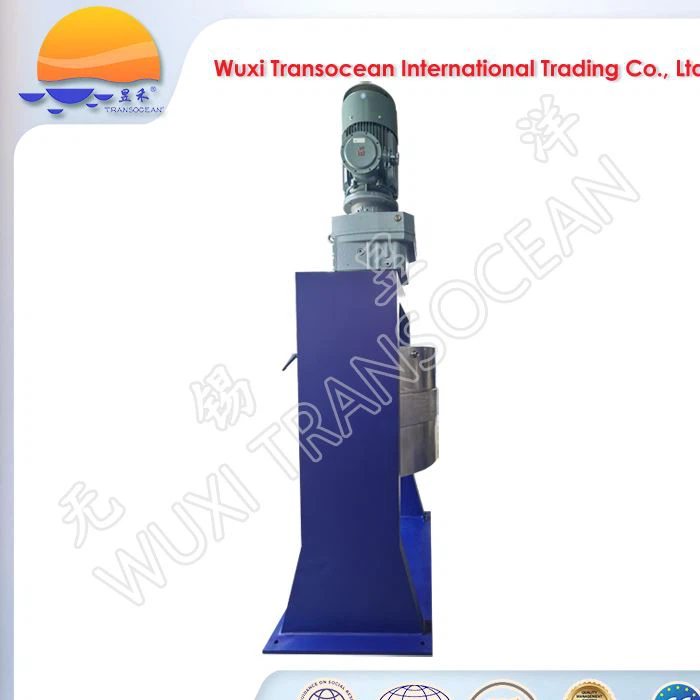
Cyclone classifiers are relatively simple and cost - effective. They work based on the centrifugal force generated by the swirling air inside the cyclone. The coarse particles are thrown to the outer wall of the cyclone and fall down, while the fine particles are carried out through the top.
Dynamic classifiers, on the other hand, are more sophisticated. They have rotating blades or vanes that create a strong air flow and a more precise separation of particles. Dynamic classifiers can achieve a higher degree of particle size control and are often used in applications where very fine and uniform particle sizes are required.
Static classifiers are the most basic type. They rely on the natural settling of particles due to gravity and the air flow passing through them. While they are not as efficient as dynamic classifiers, they are still suitable for some applications where a less precise particle size separation is acceptable.
In a vertical ball mill system, the choice of classifier depends on several factors, such as the type of material being ground, the desired particle size, and the production capacity. For example, if you're grinding a hard and abrasive material, a more robust classifier may be needed to handle the wear and tear. If you need a very fine and uniform particle size, a dynamic classifier would be a better choice.
As a supplier of vertical ball mills, I've seen firsthand how the right classifier can make a huge difference in the performance of the system. We work closely with our customers to understand their specific needs and recommend the most suitable classifier for their application.
We also offer a range of Wet Grinding Ball Mill solutions that can be integrated with different types of classifiers. Our wet grinding ball mills are designed to be highly efficient and reliable, and when combined with a well - chosen classifier, they can provide a top - notch grinding and classification system.
If you're in the market for a vertical ball mill system or looking to upgrade your existing one, don't overlook the importance of the classifier. It's a key component that can significantly impact the quality of your product, the efficiency of your operation, and your bottom line.
We're here to help you make the right choice. Whether you have questions about the different types of classifiers, need advice on system integration, or want to discuss your specific application, our team of experts is ready to assist you. Contact us to start a conversation about how we can provide you with the best vertical ball mill system for your needs.
References
- Mineral Processing Design and Operations: An Introduction, Second Edition by Barry A. Wills and Tim Napier - Munn
- Handbook of Powder Technology, Volume 1: Particle Size Analysis by G. K. Batchelor


