
Hey there! As a supplier of triple roller grinders, I often get asked about the moisture content requirements for the materials processed by these machines. It's a crucial aspect that can significantly impact the grinding process and the quality of the final product. So, let's dive right in and explore this topic in detail.
First off, what exactly is a triple roller grinder? Well, it's a powerful piece of equipment used for wet grinding and dispersing various materials. Whether you're working with paints, coatings, inks, or other viscous substances, a triple roller grinder can help you achieve a fine and uniform particle size. We offer different types of triple roller grinders, like the Coating Three Roller Grinding Mill, Hydraulic Three Roll Grinding Mill, and Triple Roller Mill for Paint. Each one is designed to meet specific industry needs.
Now, let's talk about moisture content. The moisture content of the materials going into a triple roller grinder matters a whole lot. If the moisture content is too high, it can lead to a bunch of problems. For starters, the material might become too slippery, making it difficult for the rollers to grip and grind it effectively. This can result in inconsistent particle size and poor dispersion. Plus, high moisture can cause corrosion on the rollers over time, which can shorten the lifespan of the machine.
On the other hand, if the moisture content is too low, the material can become too dry and brittle. This can lead to excessive dust generation during the grinding process, which is not only a safety hazard but can also affect the quality of the final product. Dry materials might also stick to the rollers, causing uneven wear and tear and reducing the efficiency of the grinder.
So, what's the ideal moisture content? Well, it really depends on the type of material you're working with. For most common materials used in the paint and coating industries, a moisture content between 1% and 5% is generally recommended. However, some materials might require a slightly higher or lower moisture content for optimal grinding. For example, certain types of inks might need a moisture content of around 3% to 7% to achieve the right consistency and dispersion.
Let's take a closer look at how to control the moisture content of your materials. One way is to use a dehumidifier in the storage area. This can help reduce the overall humidity in the environment and prevent the materials from absorbing too much moisture. You can also use drying equipment to remove excess moisture from the materials before they go into the grinder. Some suppliers offer pre - treatment services to ensure that the materials are at the right moisture level.
Another important factor to consider is the temperature of the grinding process. Higher temperatures can cause the moisture in the material to evaporate more quickly, which can affect the moisture content during grinding. So, it's essential to monitor and control the temperature of the grinder to maintain a stable moisture content.
When it comes to testing the moisture content of your materials, there are several methods available. One common method is the oven - drying method. You simply take a sample of the material, weigh it, dry it in an oven at a specific temperature for a set period of time, and then weigh it again. The difference in weight can be used to calculate the moisture content. There are also more advanced moisture meters available that can provide quick and accurate readings.
Now, let's talk about how the moisture content affects the performance of our triple roller grinders. Our machines are designed to handle a wide range of moisture contents, but for the best results, it's still important to keep the moisture within the recommended range. When the moisture content is right, the rollers can effectively grind and disperse the material, resulting in a high - quality final product with a consistent particle size.

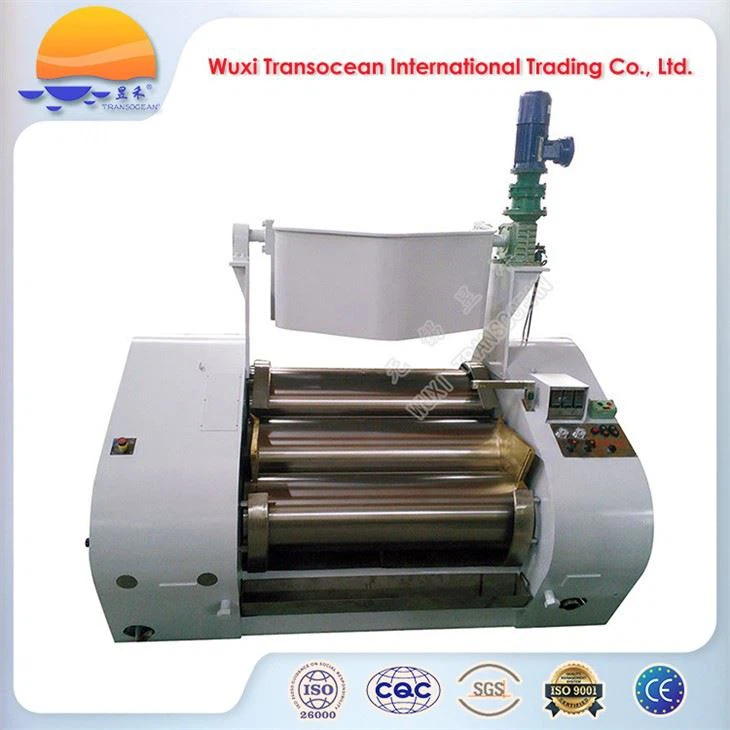
If you're having trouble achieving the right moisture content for your materials, don't worry. Our team of experts is always here to help. We can provide you with advice on how to control the moisture content and optimize the performance of your triple roller grinder.
In conclusion, the moisture content of the materials processed by a triple roller grinder is a critical factor that can have a big impact on the grinding process and the quality of the final product. By understanding the ideal moisture content for your specific materials and taking steps to control it, you can ensure that your triple roller grinder operates at its best.
If you're interested in learning more about our triple roller grinders or need help with your material processing, feel free to reach out to us. We're always happy to have a chat and discuss how we can meet your specific needs. Whether you're a small business just starting out or a large industrial manufacturer, we have the right solution for you.
So, don't hesitate to get in touch if you're thinking about purchasing a triple roller grinder or need to upgrade your existing equipment. We can provide you with detailed information, quotes, and even arrange for a demonstration so you can see our machines in action.
Let's work together to take your material processing to the next level!
References
- "Principles of Grinding and Dispersing" - A technical guide on grinding equipment and processes.
- Industry standards and guidelines for paint, coating, and ink manufacturing.


