
The hardness of grinding media is a critical factor that significantly impacts the grinding process in a Basket Grinding Mill. As a reputable supplier of Basket Grinding Mill, we have witnessed firsthand how the hardness of grinding media can make or break the efficiency and quality of the grinding operation. In this blog, we will delve into the various aspects of how the hardness of grinding media influences grinding in a Basket Grinding Mill.
Understanding the Basics of Grinding in a Basket Grinding Mill
Before we explore the influence of grinding media hardness, let's briefly understand the working principle of a Basket Grinding Mill. A Basket Grinding Mill is a type of wet grinding equipment used for reducing the particle size of various materials. It consists of a basket-shaped container filled with grinding media, such as beads or balls. The basket rotates at high speed, causing the grinding media to collide with the material being ground, resulting in size reduction through impact and shear forces.
The Role of Grinding Media Hardness
The hardness of grinding media refers to its resistance to deformation or scratching. It is typically measured on the Mohs scale or the Rockwell scale. Harder grinding media have a higher resistance to wear and can maintain their shape and size for a longer period during the grinding process.
1. Grinding Efficiency
One of the primary ways in which the hardness of grinding media affects the grinding process is through its impact on grinding efficiency. Harder grinding media can deliver more energy to the material being ground during collisions. This is because they are less likely to deform upon impact, allowing them to transfer a greater portion of their kinetic energy to the particles. As a result, harder grinding media can break down the particles more effectively, leading to faster particle size reduction and higher throughput.
For example, in the grinding of pigments for the paint industry, using harder grinding media in a Basket Grinding Mill can significantly reduce the grinding time required to achieve the desired particle size distribution. This not only increases productivity but also reduces energy consumption, making the grinding process more cost - effective.
2. Particle Size Distribution
The hardness of grinding media also plays a crucial role in determining the particle size distribution of the ground material. Harder grinding media tend to produce a narrower particle size distribution compared to softer media. This is because they are more consistent in their grinding action, breaking the particles into more uniform sizes.
In applications where a specific particle size range is required, such as in the production of pharmaceuticals or high - performance ceramics, the use of harder grinding media in a Basket Grinding Mill can help ensure that the final product meets the strict quality standards. For instance, in the manufacturing of ceramic powders, a narrow particle size distribution is essential for achieving optimal sintering properties and mechanical strength.
3. Wear and Contamination
Another important aspect influenced by the hardness of grinding media is wear and contamination. Softer grinding media are more prone to wear during the grinding process. As they wear down, they can release small particles into the material being ground, leading to contamination. This can be a significant problem in industries where high - purity products are required, such as the food and beverage or electronics industries.
Harder grinding media, on the other hand, have a lower wear rate. They can maintain their integrity for a longer time, reducing the risk of contamination. This not only improves the quality of the final product but also reduces the frequency of media replacement, resulting in lower operating costs.
Selecting the Right Hardness of Grinding Media
Choosing the appropriate hardness of grinding media for a Basket Grinding Mill depends on several factors, including the type of material being ground, the desired particle size, and the production requirements.
1. Material Properties
The hardness of the material being ground is a key consideration. If the material is relatively soft, such as polymers or some types of pigments, softer grinding media may be sufficient. However, for harder materials like minerals or metals, harder grinding media are usually required to achieve efficient grinding.
2. Desired Particle Size
The target particle size also influences the choice of grinding media hardness. For fine grinding applications where very small particle sizes are required, harder grinding media are often preferred as they can provide more precise and consistent grinding.
3. Production Requirements
In high - volume production environments, the wear rate of the grinding media becomes a critical factor. Using harder grinding media can reduce the need for frequent media replacement, minimizing downtime and increasing overall productivity.
Comparison with Other Grinding Mills
It is also interesting to compare the influence of grinding media hardness in a Basket Grinding Mill with other types of grinding mills, such as the Dispersing Grinding Mill and the Horizontal Turbine Type Bead Mill.
In a Dispersing Grinding Mill, the grinding mechanism is more focused on dispersion and mixing in addition to particle size reduction. While the hardness of grinding media still affects the grinding efficiency and particle size distribution, the design of the mill allows for a wider range of media hardness to be used depending on the specific application.
In a Horizontal Turbine Type Bead Mill, the high - speed rotation of the turbine generates intense shear and impact forces. Similar to the Basket Grinding Mill, harder grinding media can enhance the grinding performance, but the mill's design may require a different balance between media hardness and other factors such as media size and density.
Conclusion
In conclusion, the hardness of grinding media has a profound influence on the grinding process in a Basket Grinding Mill. It affects grinding efficiency, particle size distribution, wear, and contamination. By carefully selecting the appropriate hardness of grinding media based on the material properties, desired particle size, and production requirements, manufacturers can optimize the performance of their Basket Grinding Mills and achieve high - quality products.
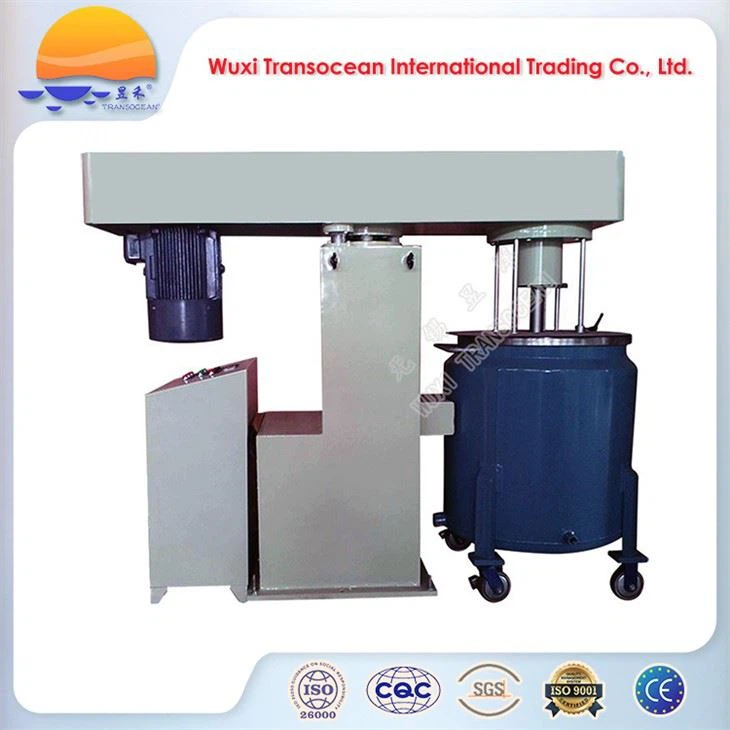

As a leading supplier of Basket Grinding Mills, we understand the importance of providing our customers with the right solutions for their grinding needs. We offer a wide range of grinding media options with different hardness levels to ensure that our customers can achieve the best possible results in their grinding operations.
If you are interested in learning more about our Basket Grinding Mills or need assistance in selecting the appropriate grinding media for your application, please do not hesitate to contact us. Our team of experts is ready to help you find the most suitable solution for your business.
References
- S. L. Mason, “Mechanochemistry of Solids,” Cambridge University Press, 1991.
- R. H. Perry and D. W. Green, “Perry's Chemical Engineers' Handbook,” McGraw - Hill, 2008.
- P. J. Svarovsky, “Solid - Liquid Separation,” Butterworth - Heinemann, 1990.


