
As a supplier of sand mills, I've seen firsthand how the particle size distribution of raw materials can significantly impact the grinding process. In this blog, I'll share some insights on this topic, based on my experience in the industry.

Let's start by understanding what particle size distribution is. Simply put, it refers to the range of particle sizes present in a given sample of raw material. This distribution can vary widely, from a narrow range where most particles are similar in size to a broad range with a mix of large and small particles.
Impact on Grinding Efficiency
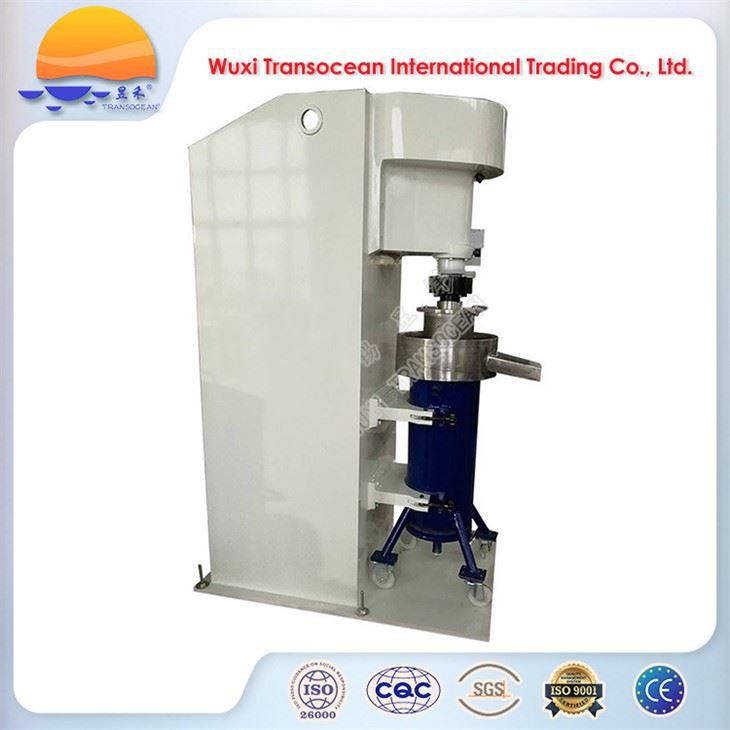
One of the most obvious impacts of particle size distribution on sand mill grinding is on efficiency. When the raw material has a narrow particle size distribution, the grinding process tends to be more efficient. That's because the beads in the sand mill can act more uniformly on particles of similar size. For example, in a Vertical Bead Mill, the agitation system can more effectively break down particles that are all in a similar size range.
On the other hand, a broad particle size distribution can slow down the grinding process. Large particles require more energy and time to break down compared to small ones. In a sand mill, the beads have to work harder to reduce the size of these large particles, while at the same time, they may over - grind the smaller particles. This uneven grinding can lead to longer processing times and increased energy consumption.
Product Quality
The particle size distribution of the raw material also has a direct impact on the quality of the final product. A well - controlled particle size distribution in the raw material can result in a more consistent and high - quality end product. For instance, in industries like paint and ink production, a uniform particle size is crucial for achieving good color strength, gloss, and stability.
If the raw material has a broad particle size distribution, the final product may have inconsistent properties. Large particles can cause problems such as sedimentation in paints or clogging in printing nozzles. In a Horizontal Agitator Bead Mill, which is commonly used in these industries, it becomes more challenging to achieve a uniform particle size when starting with a raw material that has a wide range of particle sizes.
Wear and Tear on the Sand Mill
Another aspect to consider is the wear and tear on the sand mill itself. When dealing with a raw material that has a broad particle size distribution, the sand mill components are subjected to more stress. The large particles can cause more abrasion on the grinding chamber, agitator, and beads. This means that the parts of the sand mill may need to be replaced more frequently, increasing the overall operating cost.
In contrast, a narrow particle size distribution reduces the uneven stress on the sand mill. The beads and other components can work more smoothly, resulting in less wear and a longer lifespan for the equipment. For example, in a Horizontal Turbine Type Bead Mill, a consistent particle size in the raw material can help maintain the efficiency and performance of the turbine - based agitation system.
Strategies for Dealing with Different Particle Size Distributions
As a sand mill supplier, I often work with customers to develop strategies for dealing with different particle size distributions. For raw materials with a broad particle size distribution, pre - screening or classification can be a useful step. This involves separating the large and small particles before they enter the sand mill. By doing this, the sand mill can focus on grinding particles within a more manageable size range.
Another approach is to adjust the operating parameters of the sand mill. For example, increasing the speed of the agitator or using smaller grinding beads can help break down large particles more effectively. However, these adjustments need to be carefully balanced to avoid over - grinding the smaller particles.
Conclusion
In conclusion, the particle size distribution of the raw material plays a crucial role in the sand mill grinding process. It affects grinding efficiency, product quality, and the wear and tear on the equipment. As a sand mill supplier, I'm always looking for ways to help my customers optimize their grinding processes based on the characteristics of their raw materials.
If you're in the market for a sand mill or need advice on how to handle the particle size distribution of your raw materials, I'd love to have a chat. We can discuss your specific requirements and find the best solution for your business.
References
- Smith, J. (2018). "Particle Size Analysis in Grinding Processes". Journal of Industrial Grinding.
- Brown, A. (2019). "Impact of Raw Material Characteristics on Grinding Equipment Performance". Grinding Technology Review.


