
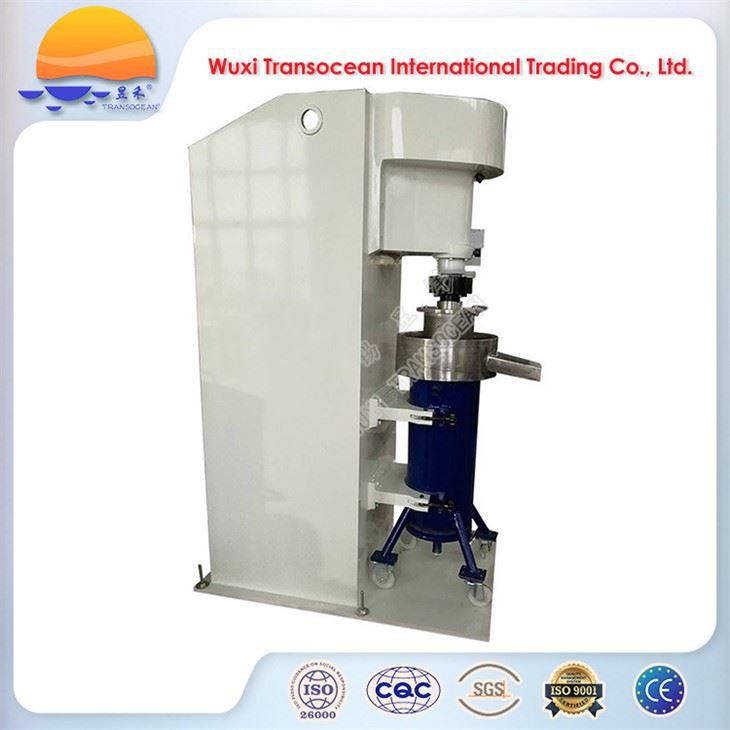
Hey there! As a supplier of Basket Grinding Mills, I often get asked about the grinding fineness these machines can achieve. So, let's dive right in and explore this topic.
First off, what exactly is grinding fineness? It's basically a measure of how small the particles in a material get after being ground. And when it comes to Basket Grinding Mills, they're pretty impressive in this department.
The grinding fineness of a Basket Grinding Mill depends on several factors. One of the key ones is the type of material you're grinding. Different materials have different hardness, density, and particle structures, which all affect how fine they can be ground. For example, soft materials like pigments or some polymers can be ground to a much finer degree compared to hard materials like ceramics or certain metals.
Another important factor is the grinding media used in the mill. The grinding media are the small balls or beads that do the actual grinding work. Usually, smaller grinding media can achieve finer grinding results. In a Basket Grinding Mill, you can use various types of grinding media, such as glass beads, ceramic beads, or steel balls. Each type has its own advantages and is suitable for different applications. Glass beads are relatively inexpensive and work well for general-purpose grinding. Ceramic beads, on the other hand, are harder and more wear-resistant, making them a great choice for grinding hard materials. Steel balls are very dense and can provide high impact force, which is useful for quickly reducing the particle size.
The speed of the agitator in the Basket Grinding Mill also plays a crucial role. A higher agitator speed generally leads to more intense grinding and can result in finer particles. However, there's a limit to how fast you can go. If the speed is too high, it can cause excessive heat generation, which may damage the material being ground or the grinding media. So, it's important to find the right balance.
Now, let's talk about the typical grinding fineness that a Basket Grinding Mill can achieve. In general, these mills can achieve a grinding fineness ranging from a few micrometers to tens of micrometers. For very fine applications, such as in the production of high-quality inks, paints, or cosmetics, a Basket Grinding Mill can often grind materials down to a fineness of around 5 - 10 micrometers. This level of fineness is sufficient for most industrial applications where a smooth and homogeneous product is required.
But if you need even finer grinding, there are other types of grinding mills available. For example, the Vertical Bead Mill and the Horizontal Agitator Bead Mill are designed for ultra-fine grinding and can achieve a fineness of less than 1 micrometer in some cases. These mills are often used in high-tech industries like electronics, pharmaceuticals, and advanced materials. Another option is the Horizontal Pin Type Bead Mill, which is also capable of achieving very fine grinding results.
However, the Basket Grinding Mill still has its own advantages. It's relatively simple to operate and maintain, and it's a cost-effective solution for many applications. It's also a great choice for small to medium-scale production. If you're just starting out in a business that requires grinding, or if you have a limited budget, a Basket Grinding Mill can be a great option.
When choosing a grinding mill, it's important to consider your specific requirements. Think about the type of material you'll be grinding, the desired grinding fineness, the production volume, and your budget. If you're not sure which mill is the best fit for your needs, our team of experts is always here to help. We can provide you with detailed information and advice based on your specific situation.
In conclusion, a Basket Grinding Mill is a versatile and effective tool for achieving a wide range of grinding fineness. Whether you're looking to produce a general-purpose product or a high-quality, fine-particle material, this mill can get the job done. If you're interested in learning more about our Basket Grinding Mills or other grinding equipment, don't hesitate to reach out. We're always happy to have a chat and discuss how we can meet your grinding needs.

References
- "Handbook of Grinding Technology" by John T. Black
- "Principles of Powder Technology" by R. H. Perry and D. W. Green


