
Temperature control plays a crucial role in various industrial processes, and the operation of a printing ink basket mill is no exception. As a supplier of Printing Ink Basket Mills, I have witnessed firsthand the significant impact that temperature control can have on the properties of printing ink. In this blog post, I will delve into the effects of temperature control on ink properties during the milling process, exploring how it influences viscosity, color development, and overall ink quality.
Understanding the Printing Ink Basket Mill
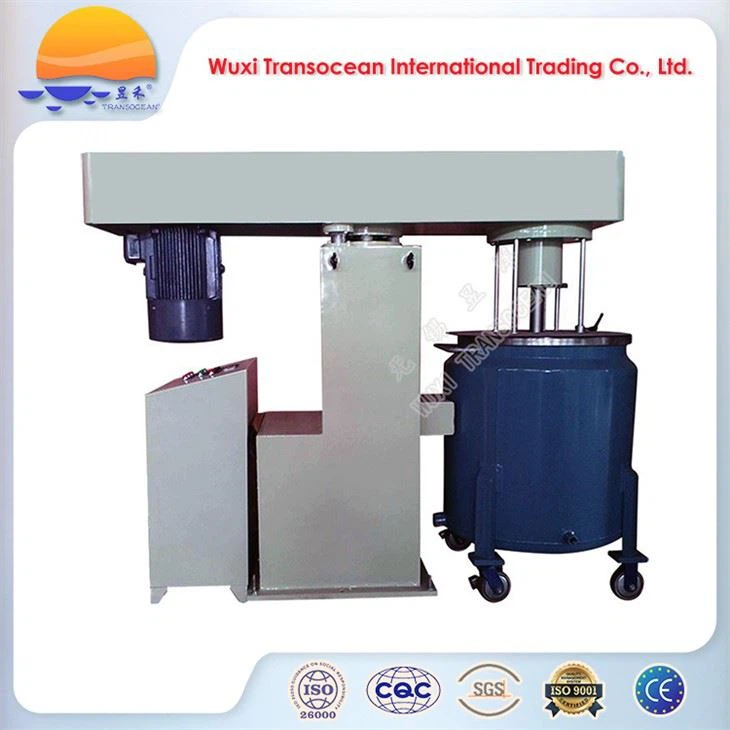
Before discussing the effects of temperature control, it's essential to understand the function of a printing ink basket mill. A Basket Grinding Mill is a type of wet grinding equipment used to disperse and grind pigments and other solid particles in a liquid medium, typically a resin or solvent. The mill consists of a basket containing grinding media, such as beads or balls, which are agitated by a high-speed impeller. As the impeller rotates, the grinding media collide with the pigment particles, breaking them down into smaller sizes and dispersing them evenly throughout the liquid medium.
Impact of Temperature on Ink Viscosity
One of the most significant effects of temperature control on ink properties is its impact on viscosity. Viscosity is a measure of a fluid's resistance to flow, and it plays a crucial role in the printing process. Inks with too high a viscosity may not flow smoothly through the printing press, resulting in poor print quality, while inks with too low a viscosity may spread too much on the printing substrate, causing blurring and other defects.
Temperature has a direct influence on the viscosity of printing ink. As the temperature increases, the viscosity of the ink decreases, making it more fluid and easier to flow. Conversely, as the temperature decreases, the viscosity of the ink increases, making it more viscous and less likely to flow. This relationship between temperature and viscosity is due to the fact that temperature affects the molecular motion of the ink components. At higher temperatures, the molecules have more energy and move more freely, reducing the internal friction between them and lowering the viscosity. At lower temperatures, the molecules have less energy and move more slowly, increasing the internal friction and raising the viscosity.
In a printing ink basket mill, maintaining a consistent temperature is essential for controlling the viscosity of the ink. If the temperature is too high, the ink may become too thin and runny, making it difficult to achieve the desired print quality. On the other hand, if the temperature is too low, the ink may become too thick and viscous, causing it to clog the mill and the printing press. Therefore, it is crucial to monitor and control the temperature of the ink during the milling process to ensure that it remains within the optimal range for the printing application.
Effect of Temperature on Color Development
In addition to viscosity, temperature also affects the color development of printing ink. Color development refers to the process by which the pigments in the ink absorb and reflect light, creating the desired color. Temperature can influence color development in several ways.
First, temperature can affect the solubility of the pigments in the ink. Some pigments are more soluble at higher temperatures, while others are more soluble at lower temperatures. If the temperature is not controlled properly, the pigments may not dissolve completely in the ink, resulting in uneven color distribution and poor color development.
Second, temperature can affect the chemical reactions that occur during the milling process. Some pigments may undergo chemical reactions at high temperatures, which can alter their color and properties. For example, some organic pigments may decompose or oxidize at high temperatures, resulting in a change in color or a loss of color intensity. Therefore, it is important to control the temperature during the milling process to prevent these chemical reactions from occurring and to ensure that the pigments retain their original color and properties.
Finally, temperature can affect the drying time of the ink. Inks with a higher temperature tend to dry more quickly than inks with a lower temperature. This is because the higher temperature increases the evaporation rate of the solvents in the ink, causing the ink to dry faster. However, if the ink dries too quickly, it may not have enough time to spread evenly on the printing substrate, resulting in poor print quality. Therefore, it is important to control the temperature during the printing process to ensure that the ink dries at the appropriate rate for the printing application.
Influence of Temperature on Ink Stability
Another important effect of temperature control on ink properties is its influence on ink stability. Ink stability refers to the ability of the ink to maintain its properties over time, such as viscosity, color, and particle size distribution. Temperature can affect ink stability in several ways.
First, temperature can affect the chemical reactions that occur within the ink. Some ink components may react with each other at high temperatures, causing the ink to degrade or change its properties over time. For example, some resins may crosslink or polymerize at high temperatures, resulting in an increase in viscosity and a decrease in ink stability. Therefore, it is important to control the temperature during the milling process to prevent these chemical reactions from occurring and to ensure that the ink remains stable over time.

Second, temperature can affect the physical properties of the ink components. Some pigments and other solid particles may settle or agglomerate at low temperatures, causing the ink to become uneven and unstable. On the other hand, at high temperatures, some solvents may evaporate, causing the ink to become thicker and more viscous. Therefore, it is important to maintain a consistent temperature during the storage and handling of the ink to prevent these physical changes from occurring and to ensure that the ink remains stable over time.
Importance of Temperature Control in Printing Ink Basket Mills
Given the significant impact that temperature control can have on ink properties, it is clear that maintaining a consistent temperature is essential for achieving high-quality printing results. In a printing ink basket mill, temperature control can be achieved through several methods, such as using a cooling jacket or a temperature control system.
A cooling jacket is a device that surrounds the mill and circulates a cooling fluid, such as water or glycol, to remove heat from the ink during the milling process. By controlling the flow rate and temperature of the cooling fluid, the temperature of the ink can be maintained within a narrow range, ensuring consistent viscosity, color development, and ink stability.
A temperature control system is a more advanced method of temperature control that uses sensors and controllers to monitor and adjust the temperature of the ink in real-time. The system can be programmed to maintain a specific temperature setpoint, and it can automatically adjust the cooling or heating rate as needed to ensure that the temperature remains within the desired range.
In addition to using a cooling jacket or a temperature control system, it is also important to monitor the temperature of the ink regularly during the milling process. This can be done using a thermometer or a temperature sensor, and the readings should be recorded and analyzed to ensure that the temperature is within the optimal range for the printing application.
Conclusion
In conclusion, temperature control plays a crucial role in the operation of a printing ink basket mill and has a significant impact on the properties of printing ink. By maintaining a consistent temperature, it is possible to control the viscosity, color development, and ink stability, ensuring high-quality printing results. As a supplier of Printing Ink Basket Mills, I understand the importance of temperature control in the printing process, and I am committed to providing our customers with high-quality equipment and solutions that can help them achieve optimal results.
If you are interested in learning more about our Printing Ink Basket Mills or other wet grinding equipment, such as Horizontal Turbine Type Bead Mill and Vertical Bead Mill, please feel free to contact us. Our team of experts will be happy to answer your questions and provide you with more information about our products and services. We look forward to working with you to meet your printing ink production needs.
References
- ASTM International. (2023). Standard Test Methods for Viscosity of Printing Inks. ASTM D4287-19.
- ISO. (2022). Printing Technology - Test Methods for Printing Inks - Part 1: Determination of Viscosity. ISO 12644-1:2022.
- Sheth, P. R., & Sheth, R. P. (2018). Printing Ink Technology: Properties, Testing, and Formulation. CRC Press.


