
Hey there! As a supplier of Printing Ink Basket Mills, I've been getting a lot of questions lately about how rotation speed affects the grinding quality. So, I thought I'd dive into this topic and share some insights based on my experience in the industry.
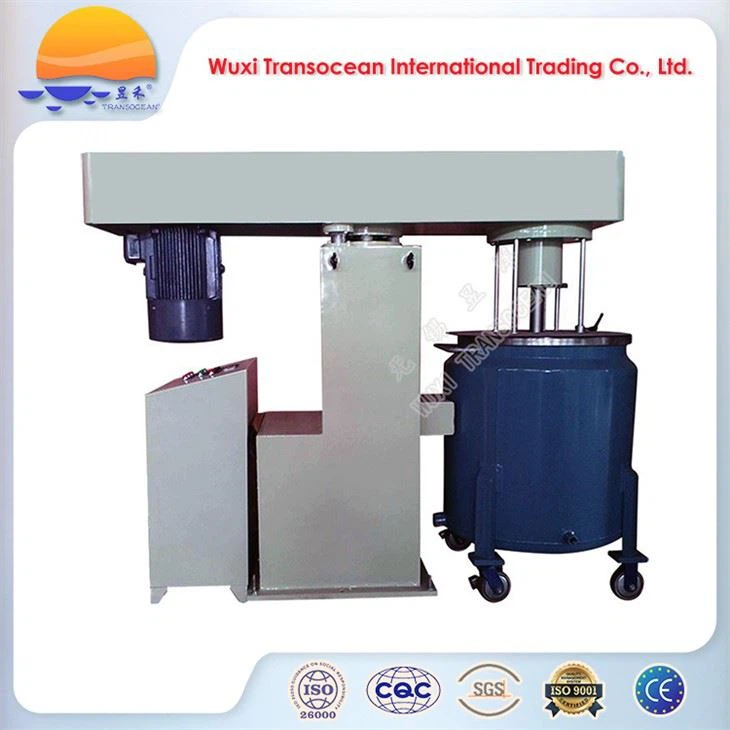
First off, let's understand what a Printing Ink Basket Mill is. It's a type of wet - grinding equipment used to grind and disperse printing inks. The main components include a basket that holds the grinding media (usually beads), a shaft with agitators, and a motor that drives the rotation. The rotation speed of the agitators is a crucial factor that can significantly impact the grinding quality.
The Basics of Grinding in a Basket Mill
When the basket mill is in operation, the agitators rotate, causing the grinding media to move around and collide with the ink particles. This collision and shearing action break down the large ink particles into smaller ones, improving the fineness and uniformity of the ink. The rotation speed determines how fast these collisions occur, and it has a direct influence on the efficiency and quality of the grinding process.
Effects of Low Rotation Speed
At a low rotation speed, the movement of the grinding media is relatively slow. This means that the number of collisions between the media and the ink particles is reduced. As a result, the grinding process takes longer, and it may not be able to achieve the desired fineness of the ink particles. The ink may also have a wider particle size distribution, which can lead to issues such as poor color consistency and uneven printing.
For example, if you're trying to grind a high - viscosity ink at a very low rotation speed, the ink may not flow well around the grinding media. The media may clump together, and the grinding action becomes less effective. This can result in a lot of large particles remaining in the ink, which can cause clogging in the printing nozzles and affect the overall print quality.
Effects of High Rotation Speed
On the other hand, a high rotation speed can increase the number of collisions between the grinding media and the ink particles, leading to faster grinding. The ink particles are broken down more quickly, and you can achieve a finer particle size in a shorter time. This is great for improving productivity and getting a more consistent ink quality.

However, there are also some drawbacks to using a very high rotation speed. First of all, it can generate a lot of heat. Excessive heat can cause the ink to change its chemical properties, such as its viscosity and drying time. This can be a major problem, especially for heat - sensitive inks.
Secondly, high rotation speeds can cause more wear and tear on the grinding media and the agitators. The grinding media may break more easily, and the agitators may get damaged over time. This means that you'll have to replace the media and the agitators more frequently, which can increase your operating costs.
Finding the Optimal Rotation Speed
So, how do you find the optimal rotation speed for your Printing Ink Basket Mill? Well, it depends on several factors, such as the type of ink you're grinding, the viscosity of the ink, and the size and type of the grinding media.
For low - viscosity inks, you can usually use a relatively high rotation speed because the ink flows easily around the grinding media. However, you still need to monitor the temperature to make sure it doesn't get too high. For high - viscosity inks, you may need to start with a lower rotation speed and gradually increase it as the ink gets more dispersed and its viscosity decreases.
It's also a good idea to do some tests with different rotation speeds and measure the particle size distribution of the ink after each test. This way, you can find the rotation speed that gives you the best balance between grinding efficiency, ink quality, and cost.
Comparing with Other Grinding Mills
When it comes to grinding inks, there are other types of mills available, such as the Horizontal Turbine Type Bead Mill and the Vertical Bead Mill. Each type of mill has its own advantages and disadvantages, and the effect of rotation speed on grinding quality can also vary.
The Horizontal Turbine Type Bead Mill, for example, is known for its high - efficiency grinding. It can handle large - scale production and can achieve a very fine particle size. The rotation speed in this type of mill also plays a crucial role in determining the grinding quality. A higher rotation speed can increase the shearing force and improve the grinding efficiency, but it also needs to be carefully controlled to avoid over - heating and excessive wear.
The Vertical Bead Mill, on the other hand, is more suitable for small - to medium - scale production. It has a different design, and the movement of the grinding media is also different. The rotation speed in a vertical bead mill affects the sedimentation and dispersion of the grinding media, which in turn affects the grinding quality.
In comparison, our Basket Grinding Mill offers a more flexible and cost - effective solution for many ink manufacturers. It's easy to operate and maintain, and you can adjust the rotation speed according to your specific needs.
Conclusion
In conclusion, the rotation speed in a Printing Ink Basket Mill has a significant impact on the grinding quality. Both low and high rotation speeds have their pros and cons, and finding the optimal speed is crucial for achieving the best results. As a supplier, we're always here to help you choose the right equipment and optimize the grinding process.
If you're in the market for a Printing Ink Basket Mill or if you have any questions about the rotation speed and its effect on grinding quality, don't hesitate to reach out. We can provide you with more detailed information and help you make an informed decision.
References
- Smith, J. (2018). "Advances in Ink Grinding Technology". Journal of Printing Technology.
- Brown, A. (2019). "The Impact of Rotation Speed on Wet - Grinding Processes". International Journal of Manufacturing Science.
- Green, C. (2020). "Comparative Study of Different Ink Grinding Mills". Printing Industry Review.


