
In today's fast - paced industrial landscape, the level of automation in manufacturing equipment has become a critical factor in determining efficiency, quality, and cost - effectiveness. As a prominent supplier of Basket Grinding Mills, I am often asked about the automation level of a modern Basket Grinding Mill. This blog post aims to delve into this topic in detail.
Understanding the Basics of a Basket Grinding Mill
A Basket Grinding Mill is a versatile piece of equipment used in wet grinding processes. It is widely employed in industries such as paints, coatings, inks, and pharmaceuticals to achieve fine particle sizes and homogeneous dispersion. The basic operation of a Basket Grinding Mill involves a basket - shaped grinding chamber that contains grinding media. The media, typically beads or balls, are agitated to break down the particles in the material being processed.
Automation Features in Modern Basket Grinding Mills
1. Automatic Loading and Unloading
One of the key advancements in modern Basket Grinding Mills is the integration of automatic loading and unloading systems. With the help of conveyors, pumps, and valves, the raw materials can be precisely metered and fed into the grinding chamber. This not only reduces manual labor but also ensures a consistent and accurate supply of materials. For instance, sensors can be used to detect the level of material in the basket, and the system can automatically stop or start the loading process accordingly.

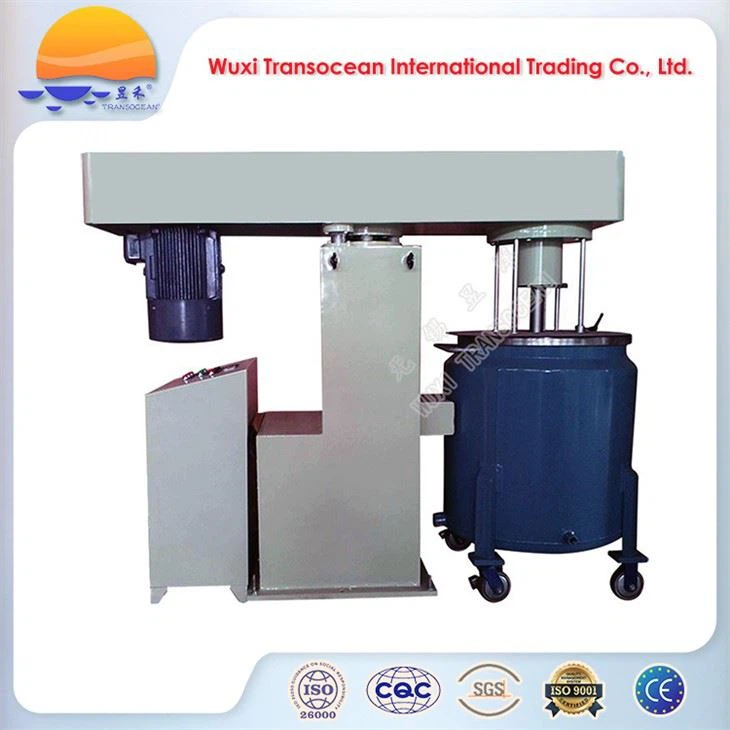
After the grinding process is complete, the automated unloading system can discharge the finished product. The system can be programmed to control the flow rate and the amount of product being removed, ensuring a smooth transition to the next stage of production. This feature significantly improves productivity and reduces the risk of human error.
2. Process Parameter Control
Modern Basket Grinding Mills are equipped with advanced control systems that allow for precise regulation of process parameters. Temperature, pressure, speed, and grinding time are all critical factors that can affect the quality of the final product. Automated systems can continuously monitor these parameters and make real - time adjustments to maintain optimal conditions.
For example, if the temperature inside the grinding chamber rises above a certain threshold, the system can automatically adjust the cooling system to prevent overheating. Similarly, the speed of the agitator can be adjusted based on the viscosity of the material and the desired particle size. These automatic adjustments ensure consistent product quality and reduce the need for manual intervention.
3. Self - cleaning Function
Automated self - cleaning is another significant feature in modern Basket Grinding Mills. After each grinding cycle, the mill can be programmed to clean itself. High - pressure water jets or cleaning agents can be used to remove the residual material from the grinding chamber and the agitator. This not only saves time but also ensures that the mill is ready for the next batch without the risk of cross - contamination.
4. Remote Monitoring and Control
With the development of Internet of Things (IoT) technology, modern Basket Grinding Mills can be remotely monitored and controlled. Operators can access the mill's data and control its functions from anywhere in the world using a smartphone, tablet, or computer. This allows for quick troubleshooting, parameter adjustment, and process optimization, even when the operator is not physically present at the factory.
Comparison with Other Grinding Equipment in Terms of Automation
To better understand the automation level of a Basket Grinding Mill, it is useful to compare it with other common grinding equipment.
Vertical Seal Sand Mill
The Vertical Seal Sand Mill is another popular wet - grinding option. While it also has a certain degree of automation, the Basket Grinding Mill often offers more flexibility in terms of batch processing. The automatic loading and unloading systems in a Basket Grinding Mill can be easily adjusted for different batch sizes, which may not be as straightforward in a Vertical Seal Sand Mill. However, the Vertical Seal Sand Mill may have some advantages in continuous - flow processes where its automation is optimized for a constant stream of material.
Horizontal Pin Type Bead Mill
The Horizontal Pin Type Bead Mill is known for its high - energy grinding capabilities. In terms of automation, both the Horizontal Pin Type Bead Mill and the Basket Grinding Mill can have similar process parameter control features. However, the Basket Grinding Mill's automatic self - cleaning function is often more efficient for batch - based operations, as it can quickly prepare the mill for the next batch. The Horizontal Pin Type Bead Mill may require more complex cleaning procedures in some cases.
Benefits of High Automation Level in Basket Grinding Mills
1. Improved Product Quality
By maintaining precise control over the grinding process, the automated Basket Grinding Mill can produce more consistent and high - quality products. The ability to regulate process parameters such as temperature, speed, and grinding time ensures that the particle size distribution is uniform, which is crucial for many applications.
2. Increased Productivity
Automation reduces the time required for manual operations such as loading, unloading, and cleaning. This allows for more batches to be processed within a given time frame, increasing overall production capacity. The continuous monitoring and adjustment of process parameters also minimize the risk of downtime due to process failures.
3. Cost Savings
Although the initial investment in an automated Basket Grinding Mill may be higher, the long - term cost savings are significant. Reduced labor costs, lower energy consumption, and less material waste contribute to a lower total cost of ownership.
4. Enhanced Safety
Automation reduces the need for operators to interact directly with the grinding equipment. This minimizes the risk of accidents and injuries associated with handling raw materials and operating the mill, creating a safer working environment.
Future Trends in Automation of Basket Grinding Mills
The future of Basket Grinding Mill automation is likely to see further integration of artificial intelligence (AI) and machine learning. These technologies can analyze large amounts of process data to predict potential failures, optimize process parameters, and improve overall efficiency. Additionally, there will be a greater emphasis on energy - efficient automation, with the development of systems that can adjust power consumption based on the actual processing requirements.
Conclusion
As a supplier of Basket Grinding Mills, I am proud to offer equipment with a high level of automation. The modern Basket Grinding Mill combines advanced features such as automatic loading and unloading, process parameter control, self - cleaning, and remote monitoring to provide a highly efficient and reliable grinding solution.
If you are looking for a grinding mill that can improve your productivity, enhance product quality, and reduce costs, our Basket Grinding Mills are an excellent choice. We invite you to contact us to discuss your specific requirements and explore how our equipment can be tailored to your needs. We look forward to the opportunity to work with you and contribute to the success of your business.
References
[1] Smith, J. (2020). Advances in Wet Grinding Technology. Industrial Manufacturing Journal, 25(3), 45 - 53.
[2] Johnson, R. and Brown, A. (2019). Automation in Grinding Equipment: A Review. Process Engineering Magazine, 18(2), 67 - 74.
[3] Williams, M. (2021). The Future of Grinding Mill Automation. Manufacturing Innovation Quarterly, 32(1), 23 - 31.


