
As a supplier of Dispersing Grinding Mills, I've had the privilege of witnessing firsthand the remarkable versatility of these machines across a wide range of natural minerals. Each mineral presents unique characteristics that demand specific grinding approaches. In this blog, I'll delve into the differences in grinding various natural minerals using a Dispersing Grinding Mill, highlighting the key factors that influence the process and the resulting outcomes.
Understanding the Dispersing Grinding Mill
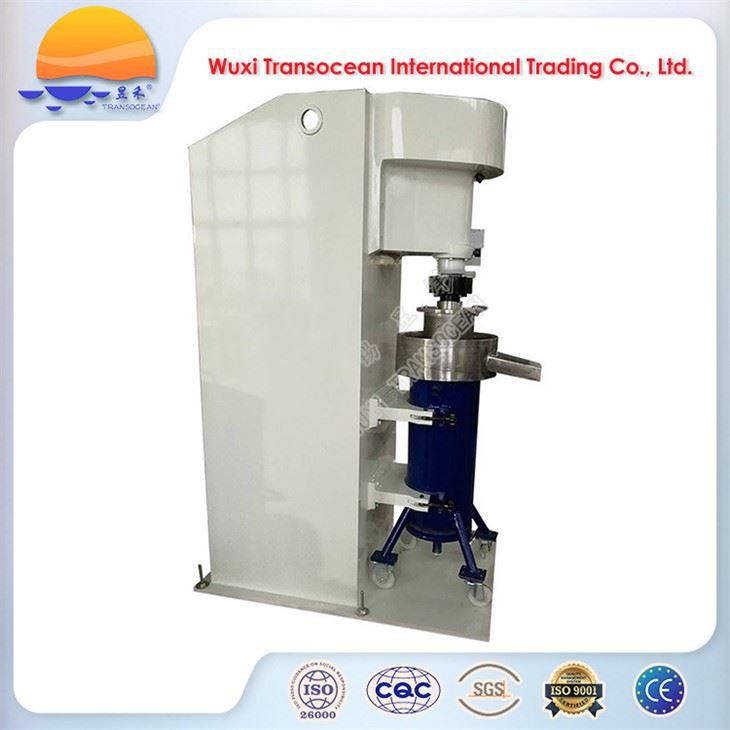
Before we explore the differences in grinding different natural minerals, let's briefly understand what a Dispersing Grinding Mill is. A Dispersing Grinding Mill is a type of wet grinding equipment designed to reduce the particle size of materials while dispersing them evenly in a liquid medium. It consists of a grinding chamber filled with grinding media, such as beads or balls, and an agitator that rotates at high speed to generate shear forces. These shear forces break down the particles and disperse them throughout the liquid, resulting in a homogeneous suspension.

Grinding Different Natural Minerals
Quartz
Quartz is one of the most common minerals on Earth, known for its hardness and chemical stability. When grinding quartz in a Dispersing Grinding Mill, several factors need to be considered. First, the hardness of quartz requires the use of high-quality grinding media, such as zirconia beads, to ensure efficient grinding. The size of the grinding media also plays a crucial role, as smaller beads can achieve finer particle sizes but may require longer grinding times.
The grinding process for quartz typically involves a two-step approach. In the first step, the quartz is pre-ground to a coarse particle size using a primary grinding mill. This helps to reduce the overall grinding time and energy consumption. The pre-ground quartz is then fed into the Dispersing Grinding Mill, where it is further ground to the desired particle size.
During the grinding process, it's important to maintain a proper slurry concentration to ensure efficient grinding. A too-thick slurry can lead to poor dispersion and increased energy consumption, while a too-thin slurry can result in excessive wear on the grinding media and the mill components.
Calcite
Calcite is a carbonate mineral that is widely used in various industries, including paper, plastics, and paints. Unlike quartz, calcite is relatively soft and can be ground more easily. However, it has a tendency to agglomerate during the grinding process, which can affect the final product quality.
To prevent agglomeration, a dispersant is often added to the slurry before grinding. The dispersant helps to break down the agglomerates and keep the particles dispersed throughout the slurry. The type and amount of dispersant used depend on the specific application and the desired particle size.
In addition to the dispersant, the grinding process for calcite also requires careful control of the grinding parameters, such as the grinding time, the agitator speed, and the temperature. These parameters can affect the particle size distribution and the surface properties of the calcite particles.
Kaolin
Kaolin is a clay mineral that is widely used in the ceramics, paper, and cosmetics industries. It has a unique platelet-like structure, which gives it excellent rheological properties. When grinding kaolin in a Dispersing Grinding Mill, the goal is to preserve the platelet structure while reducing the particle size.
To achieve this, a gentle grinding approach is often used, with a low agitator speed and a long grinding time. The use of a dispersant is also essential to prevent the kaolin particles from agglomerating and to ensure efficient grinding. In addition, the temperature of the slurry needs to be carefully controlled to prevent the kaolin from degrading.
The grinding process for kaolin can be further optimized by using a multi-stage grinding approach. In the first stage, the kaolin is pre-ground to a coarse particle size using a primary grinding mill. The pre-ground kaolin is then fed into the Dispersing Grinding Mill, where it is further ground to the desired particle size. This approach helps to reduce the overall grinding time and energy consumption while preserving the platelet structure of the kaolin particles.
Talc
Talc is a soft mineral that is widely used in the cosmetics, plastics, and rubber industries. It has a unique lamellar structure, which gives it excellent lubricating and anti-sticking properties. When grinding talc in a Dispersing Grinding Mill, the goal is to preserve the lamellar structure while reducing the particle size.
To achieve this, a similar approach to kaolin grinding is often used, with a gentle grinding process and the use of a dispersant. However, the grinding time for talc is usually shorter than that for kaolin, as talc is easier to grind.
In addition to the grinding process, the surface treatment of talc is also important to improve its compatibility with other materials. A surface treatment agent can be added to the slurry during the grinding process to modify the surface properties of the talc particles.
Comparison of Different Grinding Mills
While the Dispersing Grinding Mill is a versatile and efficient grinding machine, there are other types of grinding mills available, such as the Vertical Bead Mill and the Horizontal Agitator Bead Mill. Each type of mill has its own advantages and disadvantages, and the choice of mill depends on the specific application and the desired particle size.
The Vertical Bead Mill is a type of wet grinding mill that uses a vertical grinding chamber and a high-speed agitator to generate shear forces. It is suitable for grinding a wide range of materials, including minerals, pigments, and chemicals. The Vertical Bead Mill has a high grinding efficiency and can achieve very fine particle sizes. However, it requires a relatively large amount of energy and may have a higher maintenance cost.
The Horizontal Agitator Bead Mill is another type of wet grinding mill that uses a horizontal grinding chamber and a high-speed agitator. It is similar to the Vertical Bead Mill in terms of its grinding principle, but it has a different design and operating characteristics. The Horizontal Agitator Bead Mill is more suitable for grinding large volumes of materials and can achieve a higher throughput. However, it may require more space and may have a higher capital cost.
Conclusion
In conclusion, grinding different natural minerals in a Dispersing Grinding Mill requires a careful consideration of the mineral properties, the grinding parameters, and the use of appropriate additives. Each mineral has its own unique characteristics that demand specific grinding approaches to achieve the desired particle size and product quality.
As a supplier of Dispersing Grinding Mills, we understand the importance of providing our customers with high-quality equipment and technical support. Our mills are designed to meet the specific needs of different industries and applications, and we offer a wide range of grinding media and additives to ensure efficient and effective grinding.
If you're interested in learning more about our Dispersing Grinding Mills or have any questions about grinding different natural minerals, please don't hesitate to contact us. We'll be happy to discuss your specific requirements and provide you with a customized solution.
References
- "Mineral Processing Design and Operations: An Introduction" by Barry A. Wills and Tim Napier-Munn
- "Handbook of Nanoceramics and Nanocomposites" edited by S. V. Manorama and K. Jayaram
- "Particle Size Reduction" by R. H. Perry and D. W. Green


