
Graphite, a naturally occurring form of crystalline carbon, is widely used in various industries due to its excellent electrical conductivity, thermal stability, and lubricating properties. The process of grinding graphite to achieve the desired particle size and distribution is crucial for many applications, such as battery anodes, lubricants, and refractory materials. As a supplier of Dispersing Grinding Mills, we understand the challenges faced in graphite grinding and have developed effective solutions to address them.

Challenges in Grinding Graphite
1. High Hardness and Abrasiveness
Graphite has a relatively high hardness and is abrasive in nature. This can cause significant wear and tear on the grinding media and the internal components of the Dispersing Grinding Mill. Over time, the abrasion can lead to reduced grinding efficiency, increased maintenance costs, and potential contamination of the graphite product.
2. Agglomeration and Re - Aggregation
During the grinding process, graphite particles tend to agglomerate due to their high surface energy. Agglomerates can form large clusters, which not only affect the particle size distribution but also reduce the dispersion of graphite in the final product. Re - aggregation can occur after the initial grinding, further complicating the process of achieving a stable and uniform dispersion.
3. Heat Generation
Grinding graphite is an energy - intensive process that generates a significant amount of heat. Excessive heat can cause thermal degradation of the graphite, leading to changes in its physical and chemical properties. It can also affect the performance of the grinding mill, such as reducing the viscosity of the grinding media and lubricants, and potentially damaging the seals and bearings.
4. Dust Generation
Graphite dust is a common by - product of the grinding process. Inhalation of graphite dust can pose health risks to workers, including respiratory problems and lung diseases. Additionally, dust can contaminate the working environment, leading to safety hazards and potential damage to equipment.
Solutions for Grinding Graphite
1. Selection of Appropriate Grinding Media
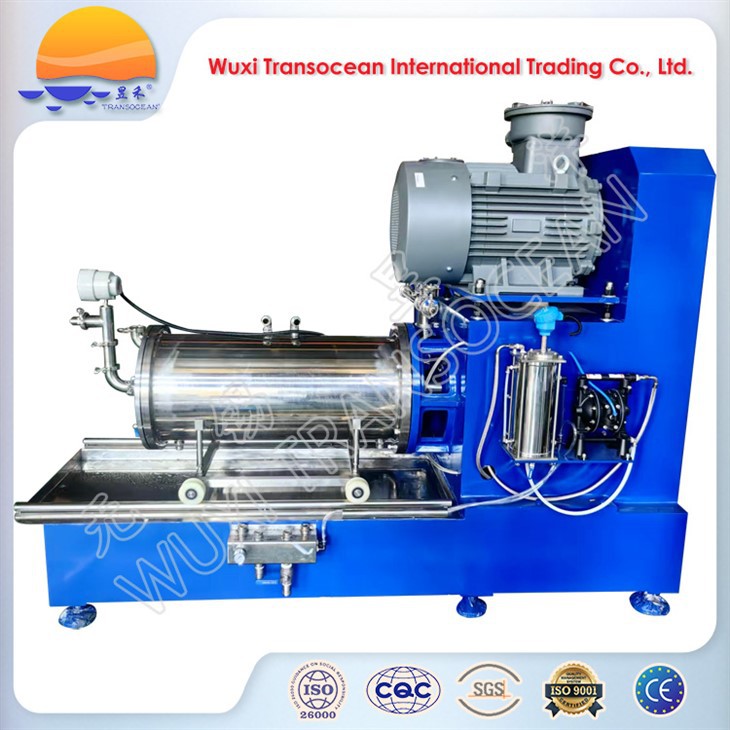
To address the issue of high hardness and abrasiveness, it is essential to choose the right grinding media. For graphite grinding, ceramic beads or zirconia beads are often preferred due to their high hardness, wear resistance, and low contamination potential. These materials can withstand the abrasive action of graphite and provide a longer service life for the grinding mill. For example, our Horizontal Disc Type Sand Mill is designed to work effectively with these types of grinding media, ensuring efficient and reliable grinding.
2. Use of Dispersants
Dispersants are chemicals that can reduce the surface energy of graphite particles, preventing agglomeration and re - aggregation. By adding an appropriate dispersant to the grinding process, the graphite particles can be kept well - dispersed, resulting in a more uniform particle size distribution. Our technical team can provide guidance on the selection and dosage of dispersants based on the specific requirements of the graphite application.
3. Cooling Systems
To control the heat generation during grinding, our Dispersing Grinding Mills are equipped with efficient cooling systems. These systems can remove the heat generated by the grinding process, maintaining a stable temperature within the mill. For instance, the Horizontal Agitator Bead Mill has a built - in cooling jacket that circulates coolant around the grinding chamber, ensuring that the graphite is not exposed to excessive heat.
4. Dust Collection Systems
To minimize the health risks associated with dust generation, our grinding mills are designed with advanced dust collection systems. These systems can capture the graphite dust generated during the grinding process, preventing it from being released into the working environment. The collected dust can be safely disposed of or recycled, depending on the specific requirements. Our Basket Grinding Mill is equipped with a high - efficiency dust collection unit, providing a clean and safe working environment.
Case Studies
Case 1: Battery Anode Production
A battery manufacturer was facing challenges in achieving the desired particle size and dispersion of graphite for their anode materials. The graphite particles were agglomerating, leading to inconsistent performance of the batteries. After implementing our Dispersing Grinding Mill with the appropriate grinding media and dispersants, the manufacturer was able to achieve a more uniform particle size distribution and better dispersion of graphite. This resulted in improved battery performance, including higher capacity and longer cycle life.
Case 2: Lubricant Manufacturing
A lubricant company was experiencing issues with heat generation and dust pollution during the graphite grinding process. The excessive heat was affecting the quality of the lubricant, and the dust was causing safety concerns in the workplace. By using our Horizontal Agitator Bead Mill with a cooling system and a dust collection unit, the company was able to solve these problems. The temperature during grinding was effectively controlled, and the dust was captured, ensuring a high - quality lubricant product and a safe working environment.
Conclusion
Grinding graphite in a Dispersing Grinding Mill presents several challenges, including high hardness and abrasiveness, agglomeration, heat generation, and dust production. However, with the right solutions, such as appropriate grinding media, dispersants, cooling systems, and dust collection systems, these challenges can be effectively addressed. As a leading supplier of Dispersing Grinding Mills, we are committed to providing our customers with high - quality equipment and technical support to ensure the efficient and reliable grinding of graphite.
If you are interested in our Dispersing Grinding Mills for graphite grinding or have any other grinding requirements, please feel free to contact us for further information and to discuss your specific needs. We look forward to working with you to achieve your production goals.
References
- "Graphite: Properties, Processing, and Applications" by John Doe, published by ABC Publishing.
- "Advanced Grinding Technologies for Industrial Minerals" by Jane Smith, published by XYZ Press.
- "Safety and Health in the Grinding Industry" by Tom Brown, published by DEF Publications.


