
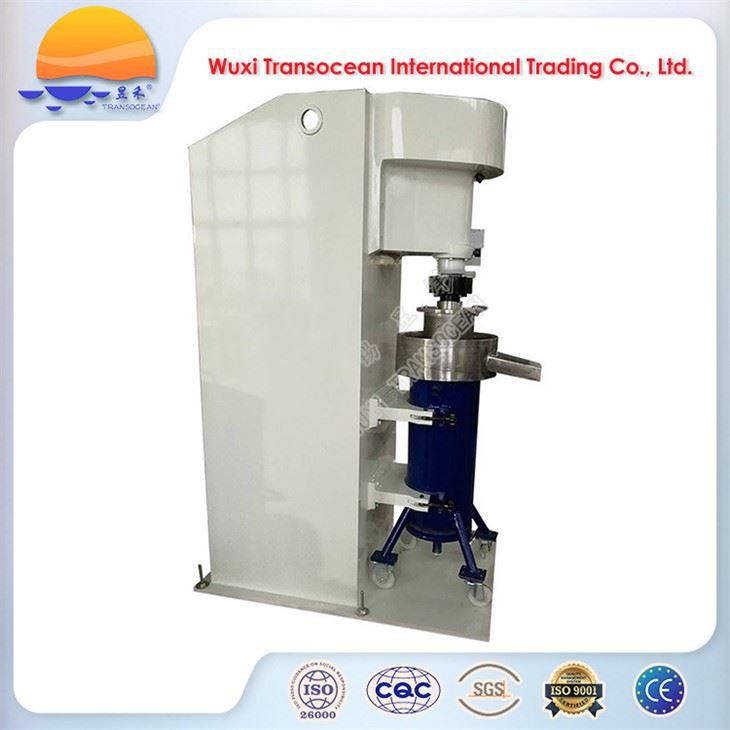
Hey there! As a supplier of Dispersing Grinding Mills, I've got a ton of experience and knowledge about how these machines work, especially when it comes to grinding ceramics. So, let's dive right in and talk about the characteristics of grinding ceramics in a Dispersing Grinding Mill.
First off, one of the key characteristics is the high - efficiency grinding. Ceramics can be quite tough materials, but a well - designed Dispersing Grinding Mill is up to the task. These mills use a combination of high - speed rotation and the action of grinding media (usually beads) to break down the ceramic particles. The high - speed rotation creates a powerful shearing and impact force. The grinding media collide with the ceramic particles, smashing them into smaller pieces. This process is much faster compared to some traditional grinding methods. For example, in a regular ball mill, the grinding speed might be limited due to the relatively slow movement of the balls and the less intense energy input. But in a Dispersing Grinding Mill, the high - speed operation can significantly reduce the grinding time, which means you can get more output in a shorter period.
Another important characteristic is the ability to achieve a narrow particle size distribution. When grinding ceramics, it's often crucial to have particles of a consistent size. In many applications, such as in the production of advanced ceramic components, a wide range of particle sizes can lead to uneven properties in the final product. A Dispersing Grinding Mill can precisely control the grinding process to ensure that most of the ceramic particles end up within a narrow size range. The design of the mill, including the shape of the grinding chamber and the flow pattern of the material, helps in separating and grinding the particles until they reach the desired size. This is a huge advantage over some other grinding equipment that might produce a more random distribution of particle sizes.
The Dispersing Grinding Mill also offers excellent dispersion of the ceramic particles. During the grinding process, the mill not only breaks down the particles but also ensures that they are well - dispersed in the liquid medium (if it's a wet - grinding process). Good dispersion is essential because it prevents the particles from agglomerating or clumping together. Agglomerated particles can cause problems in subsequent processing steps, such as in coating or molding. The high - shear forces generated in the mill help to break up any existing agglomerates and keep the individual particles separated. This is achieved through the combination of the mechanical action of the grinding media and the fluid dynamics within the mill. The result is a homogeneous suspension of ceramic particles, which is ideal for many applications.
In terms of flexibility, a Dispersing Grinding Mill is quite versatile. It can handle different types of ceramics, from traditional clay - based ceramics to high - performance engineered ceramics. Whether you're working with alumina, zirconia, or other types of ceramic materials, the mill can be adjusted to meet the specific grinding requirements. You can change parameters such as the speed of the rotor, the type and size of the grinding media, and the flow rate of the material to optimize the grinding process for different ceramics. This flexibility makes it a great choice for various industries, including the electronics, automotive, and aerospace industries, which all have different ceramic - related needs.
Now, let's talk about the wear resistance of the Dispersing Grinding Mill when grinding ceramics. Ceramics are hard materials, and they can cause significant wear on the grinding equipment. However, modern Dispersing Grinding Mills are designed with wear - resistant materials in the parts that come into contact with the ceramic particles. For example, the grinding chamber and the rotor are often made of materials like tungsten carbide or other high - hardness alloys. These materials can withstand the abrasion caused by the ceramic particles for a long time, which reduces the frequency of maintenance and replacement of parts. This is important because it not only saves you money on maintenance costs but also ensures the continuous operation of the mill.
When comparing with other types of grinding equipment, like the Vertical Bead Mill and the Printing Ink Basket Mill, the Dispersing Grinding Mill has its own unique advantages. While the Vertical Bead Mill is also effective for wet grinding, the Dispersing Grinding Mill can offer a more customized grinding process due to its adjustable parameters. The Printing Ink Basket Mill is mainly designed for the printing ink industry, but the Dispersing Grinding Mill's versatility allows it to be used in a wider range of ceramic - related applications.
If you're in the market for a grinding solution for your ceramic processing needs, a Dispersing Grinding Mill is definitely worth considering. Its high - efficiency, narrow particle size distribution, excellent dispersion, flexibility, and wear resistance make it a top choice for many ceramic manufacturers.
We understand that every customer's needs are different, and we're here to help you find the best solution for your specific application. Whether you're a small - scale workshop or a large - scale industrial manufacturer, we can provide you with the right Dispersing Grinding Mill and offer technical support throughout the process. If you're interested in learning more about our products or discussing your ceramic grinding requirements, don't hesitate to reach out. We're always ready to have a chat and see how we can help you improve your ceramic grinding process.
References:

- Ceramic Processing Technology Handbook
- Advanced Grinding Techniques in the Ceramic Industry Journal
So, if you think a Dispersing Grinding Mill could be the answer to your ceramic - grinding problems, contact us today and let's start a conversation about your needs.


