
Is a Three Roll Mill easy to operate?
As a supplier of three roll mills, I've had numerous conversations with clients about the ease of operating these machines. The three roll mill is a versatile piece of equipment widely used in various industries, including the paint, ink, pharmaceutical, and food industries. Its primary function is to grind and disperse materials to achieve a high - quality, uniform product. But the question remains: Is it easy to operate?
Understanding the Basics of a Three Roll Mill
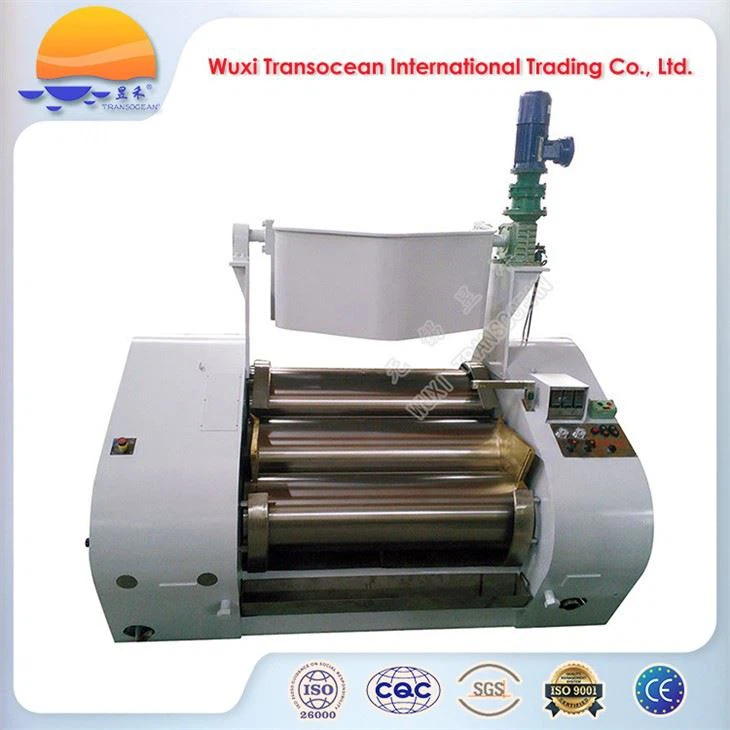
Before delving into the operation ease, let's briefly understand how a three roll mill works. A typical three roll mill consists of three horizontally arranged rolls that rotate at different speeds. The material to be processed is fed between the first two rolls. As the rolls turn, the material is subjected to shear forces, which break down the particles and disperse them evenly. The gap between the rolls can be adjusted to control the fineness of the grind.

Ease of Setup
One of the first aspects of operation is the setup. For most modern three roll mills, the setup process is relatively straightforward. The machine usually comes with a detailed user manual that guides the operator through the installation steps. Mounting the mill on a stable surface is the first step, and most mills are designed to be easily bolted down.
Connecting the power supply is also a simple task, as long as the operator follows the electrical specifications provided. Once the power is connected, the lubrication system needs to be filled, and the cooling system (if applicable) needs to be set up. Modern three roll mills often have clear markings and ports for these functions, making it easy for even novice operators to complete the setup.
Loading the Material
Loading the material into the three roll mill is an uncomplicated process. The operator simply needs to pour or scoop the material into the feed hopper located between the first two rolls. Some mills are equipped with automatic feeding systems, which can further simplify this step. These systems can be adjusted to control the rate at which the material is fed into the mill, ensuring a consistent and efficient operation.
Adjusting the Roll Gap
Adjusting the roll gap is a crucial step in achieving the desired fineness of the product. In older models, this adjustment could be a bit tricky, as it required manual turning of screws or knobs to change the distance between the rolls. However, many modern three roll mills, such as the Hydraulic Three Roll Grinding Mill, are equipped with hydraulic or pneumatic systems for roll gap adjustment. These systems allow for precise and easy adjustments, often with the push of a button or the turn of a dial.
The operator can refer to a calibration chart provided with the mill to set the appropriate roll gap based on the type of material and the desired particle size. This feature significantly reduces the learning curve for new operators and ensures consistent results.
Operating the Mill
Once the material is loaded and the roll gap is set, operating the mill is relatively simple. The operator just needs to start the motor, and the rolls will begin to rotate. Most mills have a control panel with clearly labeled buttons for starting, stopping, and adjusting the speed of the rolls. The speed adjustment is important as different materials may require different roll speeds to achieve the best grinding and dispersion results.
During the operation, the operator can monitor the process through observation windows or sensors. Some advanced mills are equipped with sensors that can detect parameters such as temperature, pressure, and power consumption. These sensors can alert the operator if there are any abnormal conditions, allowing for timely intervention.
Cleaning and Maintenance
Cleaning and maintenance are essential for the long - term performance of the three roll mill. Fortunately, modern three roll mills are designed with ease of cleaning in mind. Many mills have removable parts, such as the roll covers and the feed hopper, which can be easily taken out and cleaned. The rolls themselves can be cleaned using appropriate solvents and cleaning tools.
Regular maintenance tasks, such as lubrication and belt tension adjustment, are also relatively simple. The user manual provides a maintenance schedule and detailed instructions on how to perform these tasks. By following the maintenance schedule, the operator can ensure that the mill operates smoothly and has a long service life.
Different Types of Three Roll Mills and Their Operation
There are several types of three roll mills available in the market, each with its own features and operation characteristics. For example, the Coating Three Roller Grinding Mill is specifically designed for coating applications. It may have additional features such as anti - corrosion coatings on the rolls and a more precise temperature control system. However, the basic operation principles remain the same as other three roll mills.
The Triple Roller Grinder is another common type. It is known for its high - efficiency grinding and dispersion capabilities. Operators of this type of mill may need to pay more attention to the roll speed and the material flow rate to achieve optimal results. But again, with proper training and following the operating instructions, it is not difficult to operate.
Training and Support
As a supplier, we understand that some customers may be new to using three roll mills. That's why we offer comprehensive training and support services. Our technical team can provide on - site training to the operators, demonstrating the correct setup, operation, cleaning, and maintenance procedures. We also offer remote support through phone or email, so that customers can get timely assistance whenever they encounter problems.
Conclusion
In conclusion, a three roll mill is generally easy to operate. With the advancements in technology, modern three roll mills have become more user - friendly, with features that simplify the setup, operation, and maintenance processes. Whether you are a small - scale manufacturer or a large - scale industrial enterprise, you can quickly train your operators to use the three roll mill effectively.
If you are considering purchasing a three roll mill for your business, we invite you to contact us for more information. Our team of experts can help you select the right type of mill based on your specific requirements and provide you with detailed information on its operation and maintenance. We are committed to providing high - quality products and excellent after - sales service to ensure your satisfaction.
References
- Manufacturer's user manuals for three roll mills
- Industry research reports on the operation and performance of three roll mills


