
Improving the fineness uniformity of the product from a Basket Grinding Mill is a crucial aspect for many industries that rely on this equipment for their grinding processes. As a supplier of Basket Grinding Mills, I understand the significance of achieving consistent and high - quality fineness in the final product. In this blog, I will share some effective strategies and considerations to enhance the fineness uniformity of the output from a Basket Grinding Mill.
Understanding the Basket Grinding Mill
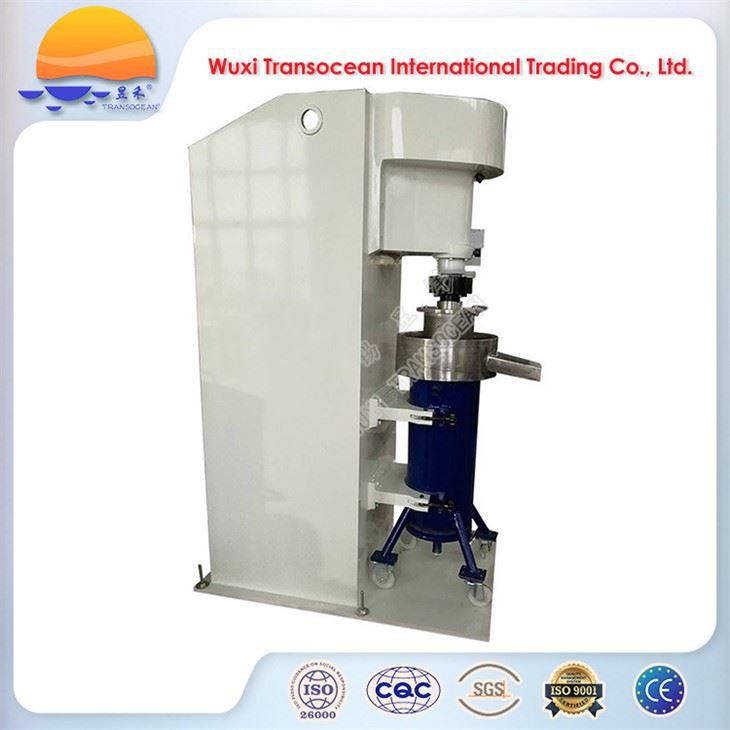
Before delving into the methods to improve fineness uniformity, it is essential to have a basic understanding of how a Basket Grinding Mill works. A Basket Grinding Mill is a type of wet - grinding equipment that uses a basket - shaped container filled with grinding media, such as beads. The basket is immersed in the product to be ground, and an agitator rotates inside the basket, causing the grinding media to collide with the particles in the product, breaking them down into smaller sizes.
Factors Affecting Fineness Uniformity
Several factors can influence the fineness uniformity of the product from a Basket Grinding Mill. These include the properties of the raw material, the type and size of the grinding media, the operating parameters of the mill, and the design of the mill itself.
Raw Material Properties
The characteristics of the raw material, such as its hardness, particle size distribution, and viscosity, play a significant role in determining the fineness uniformity. For example, if the raw material has a wide particle size distribution, it may be more challenging to achieve a uniform fineness. In such cases, pre - processing the raw material, such as screening or crushing, can help to narrow the particle size range and improve the grinding efficiency.
Grinding Media
The type and size of the grinding media are crucial factors in achieving fineness uniformity. Different types of grinding media, such as glass beads, ceramic beads, and zirconia beads, have different densities, hardness, and wear resistance. The choice of grinding media depends on the properties of the raw material and the desired fineness of the product.
In general, smaller grinding media can produce finer particles, but they may also have a lower grinding efficiency. Therefore, it is important to select the appropriate size of grinding media based on the specific requirements of the grinding process. Additionally, maintaining a consistent ratio of grinding media to the product is essential for ensuring uniform grinding.

Operating Parameters
The operating parameters of the Basket Grinding Mill, such as the rotational speed of the agitator, the grinding time, and the temperature, can also affect the fineness uniformity. A higher rotational speed of the agitator can increase the collision frequency between the grinding media and the particles, resulting in finer grinding. However, excessive speed may also cause over - heating and wear of the grinding media and the mill components.
The grinding time is another important parameter. Insufficient grinding time may lead to incomplete grinding and non - uniform particle sizes, while excessive grinding time can be wasteful and may even cause agglomeration of the particles. Therefore, it is necessary to optimize the grinding time based on the properties of the raw material and the desired fineness.
The temperature during the grinding process can also impact the fineness uniformity. High temperatures can cause the viscosity of the product to decrease, which may affect the grinding efficiency and the distribution of the grinding media. Therefore, it is important to control the temperature within an appropriate range.
Mill Design
The design of the Basket Grinding Mill, including the shape and size of the basket, the design of the agitator, and the flow path of the product, can influence the fineness uniformity. A well - designed mill should ensure a uniform distribution of the grinding media and the product, as well as efficient circulation of the product through the grinding zone.
Strategies to Improve Fineness Uniformity
Optimize the Grinding Process
One of the most effective ways to improve the fineness uniformity is to optimize the grinding process. This involves carefully selecting the raw material, the grinding media, and the operating parameters based on the specific requirements of the product. Conducting preliminary tests and experiments can help to determine the optimal combination of these factors.
For example, if the raw material has a high hardness, using a harder grinding media, such as zirconia beads, may be more appropriate. Adjusting the rotational speed of the agitator and the grinding time based on the particle size distribution of the raw material can also improve the fineness uniformity.
Implement Multiple Pass Grinding
Multiple pass grinding is a technique that involves passing the product through the Basket Grinding Mill multiple times. This can help to further reduce the particle size and improve the fineness uniformity. After each pass, the product can be screened to remove any oversized particles, and then re - fed into the mill for further grinding.
Improve the Mixing and Circulation
Ensuring proper mixing and circulation of the product and the grinding media within the mill is essential for achieving fineness uniformity. This can be achieved by using an agitator with an appropriate design, such as a high - shear agitator, to promote better dispersion of the particles and the grinding media.
In addition, optimizing the flow path of the product through the mill can help to ensure that all the particles are exposed to the grinding action evenly. This may involve modifying the design of the basket or adding baffles to the mill to enhance the circulation.
Regular Maintenance and Inspection
Regular maintenance and inspection of the Basket Grinding Mill are crucial for maintaining its performance and ensuring fineness uniformity. This includes checking the wear of the grinding media, the agitator, and other mill components, and replacing them when necessary.
Cleaning the mill regularly can also prevent the accumulation of debris and contaminants, which can affect the grinding process and the quality of the product.
Comparison with Other Grinding Mills
While Basket Grinding Mills are widely used for various grinding applications, it is also worth comparing them with other types of grinding mills, such as Horizontal Agitator Bead Mill, Vertical Bead Mill, and Horizontal Turbine Type Bead Mill.
Each type of mill has its own advantages and disadvantages in terms of fineness uniformity, grinding efficiency, and cost. For example, Horizontal Agitator Bead Mills are known for their high - energy grinding and good fineness control, while Vertical Bead Mills are often more suitable for small - scale production.
Conclusion
Improving the fineness uniformity of the product from a Basket Grinding Mill requires a comprehensive understanding of the factors that affect the grinding process and the implementation of appropriate strategies. By optimizing the raw material, the grinding media, the operating parameters, and the mill design, as well as implementing proper maintenance and inspection procedures, it is possible to achieve a high - quality and uniform fineness in the final product.
If you are interested in improving the fineness uniformity of your products using our Basket Grinding Mills or exploring other grinding solutions, please feel free to contact us for more information and to start a procurement discussion. We are committed to providing high - quality equipment and professional technical support to meet your specific needs.
References
- "Principles of Grinding and Dispersing" by Dr. Wolfgang Pietsch
- "Wet Grinding Technology" by various industry experts in the field of grinding equipment


