
Ensuring the parallelism of the rolls in a Three Roll Mill is crucial for achieving optimal performance and high - quality grinding results. As a supplier of Three Roll Mills, I have witnessed firsthand the impact that proper roll parallelism can have on the efficiency and effectiveness of these machines. In this blog post, I will share some key strategies and techniques to ensure the parallelism of the rolls in a Three Roll Mill.
Understanding the Importance of Roll Parallelism
Before delving into the methods of ensuring roll parallelism, it is essential to understand why it matters. In a Three Roll Mill, the rolls work together to shear and grind the material passing through them. If the rolls are not parallel, the pressure distribution across the rolls will be uneven. This uneven pressure can lead to inconsistent grinding, where some areas of the material are over - ground while others are under - ground. It can also cause premature wear on the rolls, reducing their lifespan and increasing maintenance costs. Additionally, poor roll parallelism can result in a lower quality of the final product, as the particle size distribution may not meet the desired specifications.
Initial Installation and Alignment
The first step in ensuring roll parallelism starts with the installation of the Three Roll Mill. During the installation process, it is vital to follow the manufacturer's guidelines precisely. The mill should be placed on a flat and stable surface. Any unevenness in the foundation can cause the rolls to be misaligned right from the start.
Use precision measurement tools such as laser alignment systems or dial indicators to check the parallelism of the rolls during installation. These tools can provide accurate readings of the distance between the rolls at multiple points along their length. Adjust the mounting brackets or the roll bearings as needed to ensure that the rolls are parallel within the specified tolerance. For example, most high - quality Three Roll Mills have a parallelism tolerance of a few thousandths of an inch.
Regular Maintenance and Inspection
Regular maintenance is key to maintaining roll parallelism over time. Set up a routine maintenance schedule that includes checking the roll parallelism at regular intervals. This can be done during scheduled maintenance shutdowns or as part of a preventive maintenance program.
Inspect the roll bearings for wear and damage. Worn bearings can cause the rolls to shift out of alignment. Replace any bearings that show signs of excessive wear or damage. Also, check the lubrication of the bearings. Proper lubrication reduces friction and helps to keep the bearings in good condition, which in turn helps to maintain roll parallelism.
Clean the rolls regularly to remove any debris or build - up that could affect their alignment. A build - up of material on the rolls can cause uneven pressure distribution and lead to misalignment. Use appropriate cleaning agents and tools to clean the rolls without causing any damage.
Monitoring and Adjustment during Operation
During the operation of the Three Roll Mill, it is important to monitor the performance of the rolls. Pay attention to any changes in the grinding quality, such as an increase in the particle size or a decrease in the uniformity of the product. These changes could be an indication of roll misalignment.
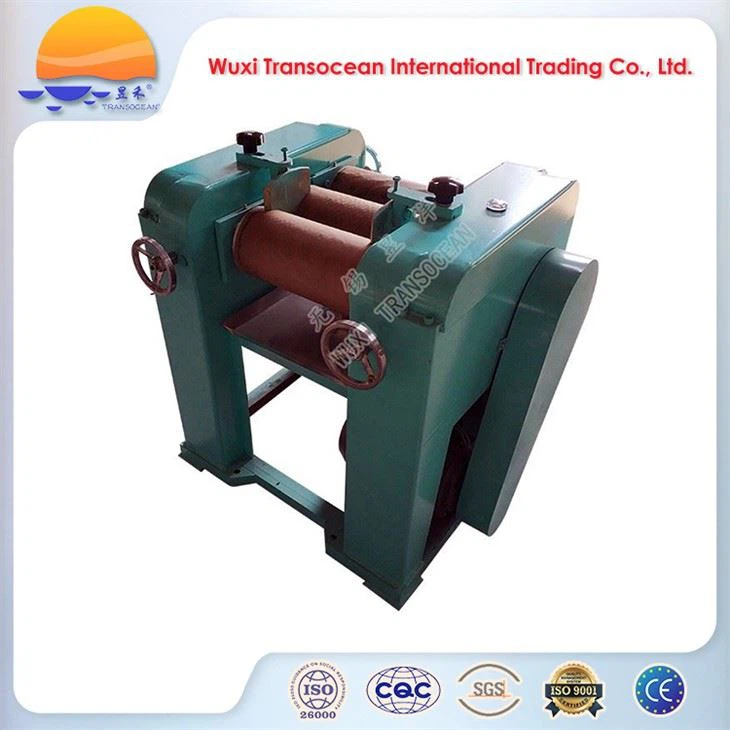

If you suspect that the rolls are not parallel, stop the mill immediately and perform a check. Use the same precision measurement tools as during installation to measure the parallelism of the rolls. If misalignment is detected, make the necessary adjustments. This may involve adjusting the roll bearings or the pressure - applying mechanisms.
Training and Operator Awareness
Proper training of the operators is essential for ensuring roll parallelism. Operators should be educated on the importance of roll parallelism and how it affects the performance of the Three Roll Mill. They should be trained to use the measurement tools correctly and to recognize the signs of roll misalignment.
Encourage operators to report any unusual noises, vibrations, or changes in the grinding process to the maintenance team. Early detection of potential alignment issues can prevent more significant problems from occurring.
The Role of Technology in Ensuring Roll Parallelism
Advancements in technology have made it easier to ensure roll parallelism in Three Roll Mills. Some modern Three Roll Mills are equipped with automated alignment systems. These systems use sensors to continuously monitor the position of the rolls and make automatic adjustments to maintain parallelism.
For example, hydraulic systems can be used to adjust the position of the rolls based on the feedback from the sensors. This real - time adjustment capability can significantly improve the accuracy of roll parallelism and reduce the need for manual intervention.
Our Three Roll Mill Offerings
As a supplier of Three Roll Mills, we offer a wide range of high - quality products to meet the diverse needs of our customers. Our Pigment Paste Three Roll Mill is specifically designed for grinding pigment pastes, ensuring a high - quality and consistent grind. Our Hydraulic Three Roll Grinding Mill features advanced hydraulic systems that provide precise control over the roll pressure and alignment. And our Triple Roller Grinder is a versatile machine suitable for a variety of applications.
Contact Us for Procurement
If you are in the market for a Three Roll Mill or need assistance with ensuring the parallelism of your existing mill, we are here to help. Our team of experts has extensive experience in the field and can provide you with the guidance and support you need. Whether you are looking for a new mill or need advice on maintenance and alignment, we are committed to helping you achieve the best results.
References
- "Handbook of Industrial Mixing: Science and Practice" by Edward L. Paul, Victor A. Atiemo - Obeng, and Suzanne M. Kresta.
- "Principles of Powder Technology" by J. S. Reed.
- Manufacturer's manuals and technical documents for Three Roll Mills.


