
Selecting the appropriate roll diameter for a Three Roll Mill is a critical decision that can significantly impact the performance, efficiency, and quality of your grinding and dispersion processes. As a seasoned supplier of Three Roll Mills, I understand the complexities involved in this choice and am here to guide you through the key considerations.
Understanding the Basics of Three Roll Mills
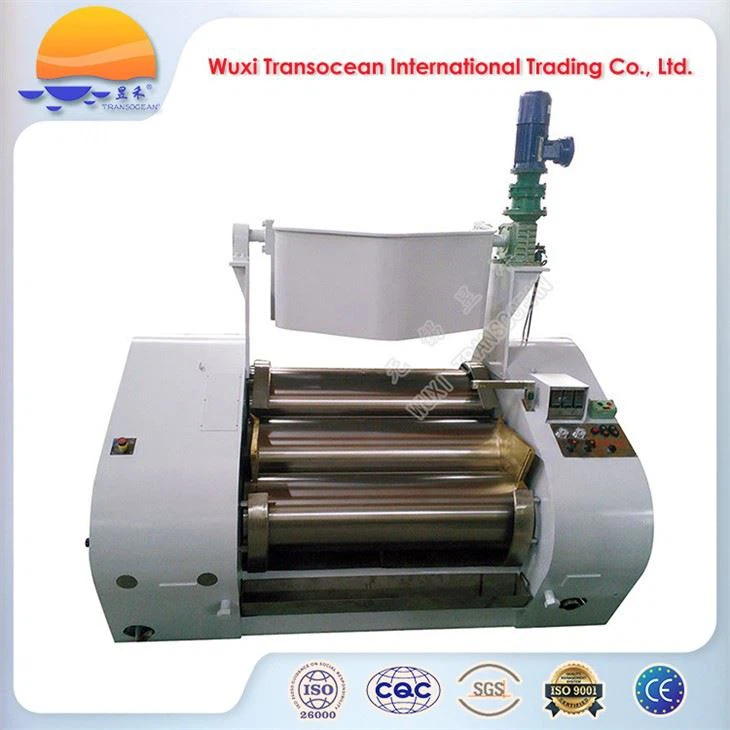
Before delving into roll diameter selection, it's essential to have a basic understanding of how Three Roll Mills work. A Three Roll Mill consists of three horizontally arranged rolls that rotate at different speeds. The material to be processed is fed between the first two rolls, and as it passes through the gaps between the rolls, it is subjected to shear forces that break down agglomerates and disperse particles. The final product is then scraped off the last roll.
Importance of Roll Diameter
The roll diameter plays a crucial role in determining the performance of a Three Roll Mill. It affects several aspects of the grinding and dispersion process, including:
- Shear Force: The shear force applied to the material is directly related to the roll diameter. Larger roll diameters generally result in higher shear forces, which are beneficial for breaking down tough agglomerates and achieving finer particle sizes.
- Throughput: The roll diameter also influences the throughput capacity of the mill. Larger rolls can handle larger volumes of material, allowing for higher production rates.
- Heat Generation: The heat generated during the grinding process is another important consideration. Larger roll diameters tend to dissipate heat more effectively, reducing the risk of overheating and ensuring consistent product quality.
- Product Quality: The roll diameter can have a significant impact on the quality of the final product. By choosing the right roll diameter, you can achieve the desired particle size distribution, dispersion, and surface finish.
Factors to Consider When Choosing Roll Diameter
When selecting the appropriate roll diameter for your Three Roll Mill, several factors need to be taken into account. These include:
- Material Properties: The properties of the material to be processed, such as viscosity, hardness, and particle size, play a crucial role in determining the required roll diameter. For example, materials with high viscosity or large particles may require larger roll diameters to achieve effective grinding and dispersion.
- Desired Particle Size: The desired particle size of the final product is another important consideration. If you need to achieve very fine particle sizes, larger roll diameters may be necessary to generate the required shear forces.
- Production Volume: The production volume you need to achieve will also influence the choice of roll diameter. If you have high production requirements, larger roll diameters can provide higher throughput and reduce processing time.
- Budget: The cost of the Three Roll Mill is an important factor to consider. Larger roll diameters generally result in higher equipment costs, so you need to balance your budget with your production requirements.
Common Roll Diameters and Their Applications
Three Roll Mills are available in a range of roll diameters, each with its own advantages and applications. Here are some common roll diameters and their typical uses:
- Small Roll Diameters (e.g., 100 - 200 mm): Small roll diameters are suitable for laboratory-scale applications, research and development, and small-scale production. They are often used for processing small volumes of high-value materials or for testing new formulations.
- Medium Roll Diameters (e.g., 200 - 400 mm): Medium roll diameters are a popular choice for medium-scale production. They offer a good balance between shear force, throughput, and cost, making them suitable for a wide range of applications.
- Large Roll Diameters (e.g., 400 - 600 mm): Large roll diameters are typically used for high-volume production. They provide high shear forces and throughput, making them ideal for processing large quantities of materials.
Our Three Roll Mill Offerings
As a leading supplier of Three Roll Mills, we offer a wide range of models with different roll diameters to meet the diverse needs of our customers. Our Coating Three Roller Grinding Mill is designed specifically for coating applications, providing excellent dispersion and grinding performance. Our Hydraulic Three Roll Grinding Mill features a hydraulic system for precise roll adjustment, ensuring consistent product quality. And our Triple Roller Grinder is a versatile machine suitable for a variety of industries.
Conclusion
Choosing the right roll diameter for your Three Roll Mill is a critical decision that can have a significant impact on your production process and product quality. By considering the factors discussed in this blog post and working with a reputable supplier, you can select the Three Roll Mill that best meets your specific needs.
If you have any questions or need further assistance in choosing the right roll diameter for your application, please don't hesitate to contact us. Our team of experts is here to help you make the right decision and ensure the success of your grinding and dispersion processes.
References
- Smith, J. (2020). Handbook of Three Roll Mill Technology. New York: Wiley.
- Jones, A. (2019). Advanced Grinding and Dispersion Techniques. London: Elsevier.
- Brown, C. (2018). Three Roll Mill Applications in the Chemical Industry. Berlin: Springer.


