
Hey there! As a supplier of fluid mixers, I often get asked about the vibration level of these machines. It's a crucial aspect that can significantly impact the performance, efficiency, and even the lifespan of a fluid mixer. So, let's dive right in and explore what the vibration level of a fluid mixer is all about.
First off, what exactly is vibration in a fluid mixer? Well, when a fluid mixer is in operation, it's constantly moving and agitating the fluid inside. This movement creates mechanical forces that can cause the mixer to vibrate. Think of it like when you shake a bottle of salad dressing to mix the oil and vinegar. The shaking motion creates vibrations in the bottle. Similarly, the rotating impellers, motors, and other moving parts in a fluid mixer generate vibrations as they work to blend, disperse, or homogenize the fluid.
Now, why does the vibration level matter? For starters, excessive vibration can lead to a whole host of problems. It can cause wear and tear on the mixer's components, leading to premature failure and costly repairs. Imagine if the bearings in the mixer are constantly being jolted around due to high vibrations. They'll start to wear out much faster, and you'll have to replace them sooner than expected.
High vibration levels can also affect the quality of the mixing process. If the mixer is vibrating too much, it might not be able to distribute the fluid evenly, resulting in inconsistent mixing. This is a big no - no, especially in industries where precision is key, like pharmaceuticals or food and beverage.
On the other hand, a certain amount of vibration is normal and expected in a fluid mixer. It's a sign that the machine is working and doing its job. But we need to make sure that the vibration stays within an acceptable range.
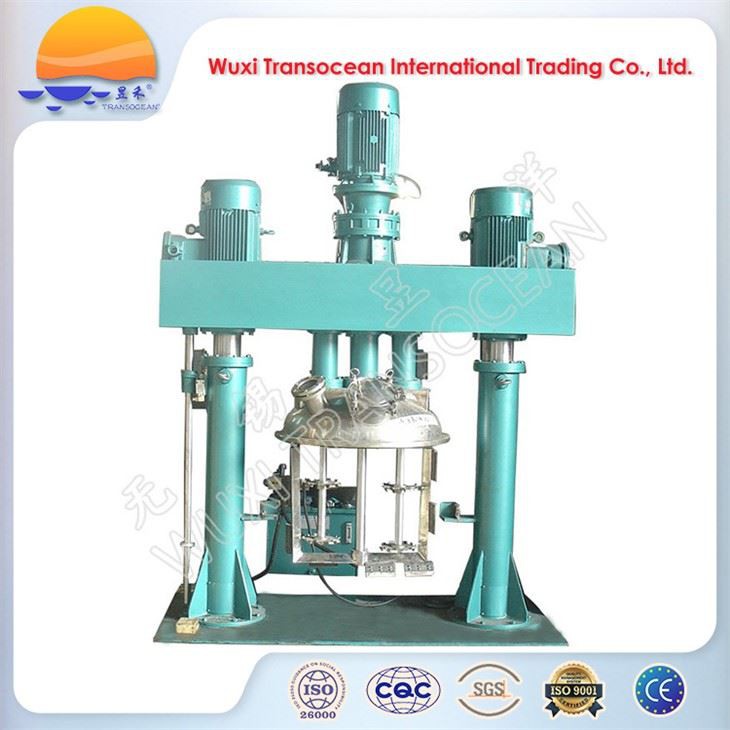

So, how do we measure the vibration level of a fluid mixer? There are several ways to do this. One common method is to use vibration sensors. These sensors can be attached to the mixer at various points, such as the motor housing or the impeller shaft. They measure the amplitude, frequency, and direction of the vibrations and provide data that can be analyzed.
Another way is to use a stroboscope. A stroboscope emits short, intense flashes of light at a specific frequency. By adjusting the frequency of the flashes to match the vibration frequency of the mixer, we can make the moving parts appear to be standing still. This allows us to visually inspect the mixer for any signs of excessive vibration or misalignment.
Now, let's talk about some factors that can affect the vibration level of a fluid mixer. The design of the mixer plays a big role. A well - designed mixer with balanced components and a sturdy frame is less likely to vibrate excessively. For example, if the impellers are not properly balanced, they can cause uneven forces and lead to higher vibrations.
The type of fluid being mixed also matters. Viscous fluids require more energy to mix, which can result in higher vibration levels. Think about trying to mix honey compared to water. Honey is much thicker and stickier, so you'll have to put in more effort to get it to blend properly. The same goes for a fluid mixer when dealing with viscous fluids.
The operating conditions of the mixer are another important factor. If the mixer is running at a high speed or under heavy load, it's more likely to vibrate. For instance, if you're using a Paint Mixing Tank to mix a large volume of thick paint, the mixer will have to work harder, and the vibration level might increase.
As a fluid mixer supplier, we take vibration levels very seriously. We design and manufacture our mixers to have optimal vibration characteristics. Our engineers use advanced computer - aided design (CAD) software to model the mixers and analyze the vibration patterns. This allows us to make adjustments to the design before the mixer is even built, ensuring that it will operate smoothly and with minimal vibration.
We also offer a range of different types of fluid mixers to suit various applications. For example, our High Shear Homogenizer is designed to provide intense mixing action while keeping the vibration level in check. It uses a high - speed rotor - stator system to break down particles and create a homogeneous mixture.
Our Multi - functional Dispersion Mixer is another great option. It can perform multiple mixing tasks, such as dispersion, emulsification, and blending, and is engineered to operate with low vibration levels.
If you're in the market for a fluid mixer, it's important to consider the vibration level. You don't want to end up with a mixer that's constantly shaking and causing problems. When you're evaluating different mixers, ask the supplier about their vibration testing procedures and what the expected vibration levels are.
In addition to choosing the right mixer, proper installation and maintenance are also crucial for keeping the vibration level under control. Make sure the mixer is installed on a stable surface and that all the connections are tight. Regularly inspect the mixer for any signs of wear or damage and perform maintenance tasks, such as lubricating the bearings and checking the alignment of the impellers.
If you have any questions about the vibration level of our fluid mixers or need help choosing the right mixer for your application, don't hesitate to reach out. We're here to provide you with the best solutions and ensure that you get a mixer that works efficiently and reliably. Whether you're in the paint industry, food and beverage, pharmaceuticals, or any other field that requires fluid mixing, we've got you covered.
Contact us today to start the conversation about your fluid mixing needs. We're eager to help you find the perfect mixer and make your mixing process as smooth as possible.
References
- Mixer Design and Engineering Handbook, 3rd Edition
- Vibration Analysis for Industrial Machinery, 2nd Edition
- Fluid Mechanics and Mixing Principles, 4th Edition


