
As a supplier of triple roller grinders, I've witnessed firsthand the pivotal role these machines play in various industries, from paints and coatings to pigments and adhesives. Central to the operation of a triple roller grinder is the motor, which serves as the powerhouse driving the entire process. In this blog post, I'll delve into the functions and significance of the motor in a triple roller grinder, exploring how it contributes to the efficiency, performance, and quality of the grinding process.
Power Generation
At its core, the motor in a triple roller grinder is responsible for generating the power needed to drive the rotation of the three rollers. These rollers, typically arranged in a horizontal configuration, are the heart of the grinding mechanism. The motor converts electrical energy into mechanical energy, which is then transferred to the rollers through a series of gears, belts, or direct couplings.
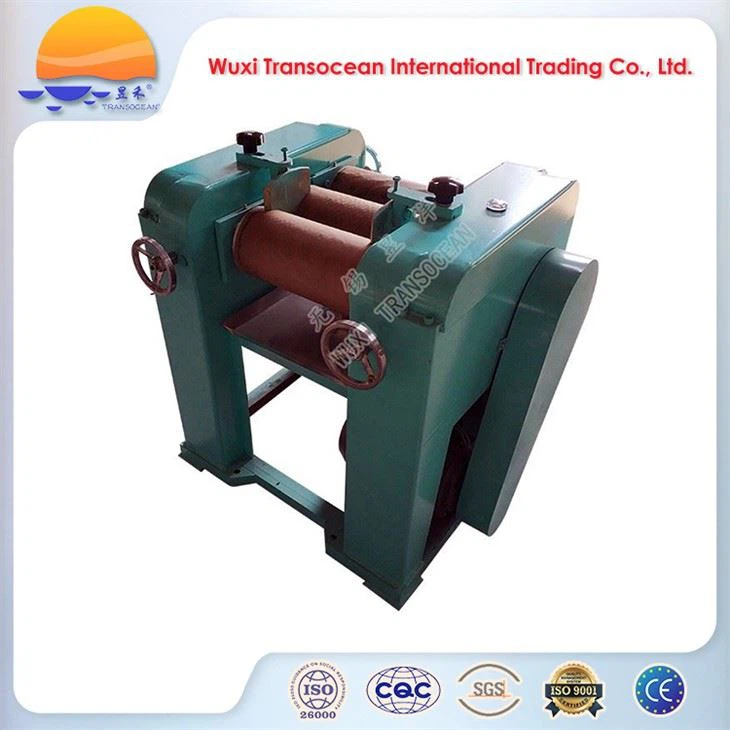

The power output of the motor is a critical factor in determining the grinder's capacity and performance. Higher-powered motors can drive the rollers at faster speeds, allowing for more efficient grinding and processing of larger volumes of material. However, it's essential to balance power with the specific requirements of the application, as excessive power can lead to overheating, wear and tear on the rollers, and increased energy consumption.
Speed Control
In addition to generating power, the motor also plays a crucial role in controlling the speed of the rollers. The ability to adjust the roller speed is essential for achieving the desired particle size and consistency in the ground material. Different materials require different grinding speeds, depending on their hardness, viscosity, and other properties.
Modern triple roller grinders are often equipped with variable speed drives (VSDs) that allow operators to precisely control the motor speed. VSDs use advanced electronics to adjust the frequency and voltage supplied to the motor, enabling smooth and accurate speed regulation. This flexibility not only improves the quality of the grinding process but also enhances the machine's versatility, making it suitable for a wide range of applications.
Torque Delivery
Torque is another important parameter that the motor must deliver to ensure efficient grinding. Torque is the rotational force that causes the rollers to turn, and it is directly related to the motor's power and speed. In a triple roller grinder, the motor must provide sufficient torque to overcome the resistance of the material being ground and maintain a consistent grinding pressure.
The torque requirements of a triple roller grinder can vary depending on the type and quantity of material being processed. For example, grinding highly viscous materials or large volumes of material may require a motor with higher torque output. Additionally, the torque delivery must be smooth and consistent to prevent uneven grinding and ensure the quality of the final product.
Stability and Reliability
The motor's stability and reliability are essential for the continuous operation of a triple roller grinder. In industrial applications, downtime can be costly, resulting in lost production, increased maintenance costs, and potential damage to the equipment. Therefore, it's crucial to choose a motor that is designed to withstand the harsh operating conditions of a grinding environment.
High-quality motors are typically built with robust components and advanced cooling systems to prevent overheating and ensure long-term reliability. They are also designed to operate quietly and efficiently, minimizing noise pollution and energy consumption. Regular maintenance and inspection of the motor can help identify and address any potential issues before they cause significant problems, ensuring the smooth and reliable operation of the triple roller grinder.
Energy Efficiency
In today's environmentally conscious world, energy efficiency is a key consideration for any industrial equipment. The motor in a triple roller grinder can consume a significant amount of energy, especially if it is not properly sized or operated. Therefore, it's important to choose a motor that is energy-efficient and designed to minimize power consumption.
Modern motors are often equipped with advanced features such as high-efficiency designs, variable speed drives, and energy-saving modes. These features can help reduce energy consumption by up to 30% or more, depending on the application. Additionally, proper maintenance and operation of the motor, such as keeping it clean and lubricated, can also help improve its energy efficiency.
Applications and Industry Examples
The role of the motor in a triple roller grinder is critical across a wide range of industries. Here are some examples of how the motor contributes to the grinding process in different applications:
- Paints and Coatings: In the paint and coating industry, triple roller grinders are used to disperse pigments and other additives into a liquid medium. The motor drives the rollers at high speeds, creating a shearing force that breaks down the pigment particles and ensures uniform dispersion. The ability to control the roller speed and torque is essential for achieving the desired color strength, gloss, and viscosity in the final product. Triple Roller Mill for Paint
- Pigments and Inks: Pigment manufacturers rely on triple roller grinders to produce high-quality pigment pastes with consistent particle size and color. The motor provides the power and torque needed to grind the pigments into fine particles and disperse them evenly in a liquid carrier. The precise control of the roller speed and pressure is crucial for achieving the desired pigment quality and performance. Pigment Paste Three Roll Mill
- Adhesives and Sealants: In the adhesive and sealant industry, triple roller grinders are used to mix and disperse various components, such as resins, fillers, and additives. The motor drives the rollers at a controlled speed, ensuring thorough mixing and dispersion of the ingredients. The ability to adjust the roller speed and pressure allows for the optimization of the adhesive or sealant's properties, such as viscosity, tack, and strength.
- Pharmaceuticals and Cosmetics: Triple roller grinders are also used in the pharmaceutical and cosmetic industries to process active ingredients, excipients, and other raw materials. The motor provides the power and precision needed to grind and disperse these materials into fine particles, ensuring uniform distribution and bioavailability. The strict quality control requirements of these industries demand a motor that is reliable, efficient, and capable of delivering consistent results. Coating Three Roller Grinding Mill
Conclusion
In conclusion, the motor is a vital component of a triple roller grinder, playing a crucial role in power generation, speed control, torque delivery, stability, reliability, and energy efficiency. The performance of the motor directly impacts the quality and efficiency of the grinding process, making it essential to choose a motor that is suitable for the specific application and requirements.
As a supplier of triple roller grinders, we understand the importance of providing our customers with high-quality motors that meet their needs. Our grinders are equipped with state-of-the-art motors that offer superior performance, reliability, and energy efficiency. Whether you're in the paint, pigment, adhesive, pharmaceutical, or cosmetic industry, our triple roller grinders can help you achieve the best possible results.
If you're interested in learning more about our triple roller grinders or have any questions about the role of the motor in the grinding process, please don't hesitate to contact us. Our team of experts is always available to provide you with the information and support you need to make an informed decision. We look forward to working with you to meet your grinding needs.
References
- "Triple Roller Grinder: Principles, Applications, and Maintenance," Industrial Grinding Equipment Handbook, 2nd Edition, John Wiley & Sons, 2018.
- "Motor Selection and Application in Grinding Machines," Journal of Manufacturing Technology, Vol. 35, No. 2, 2020.
- "Energy Efficiency in Industrial Motors: Best Practices and Technologies," International Energy Agency, 2019.


