
What is the Production Capacity of a Triple Roller Grinder?
As a supplier of Triple Roller Grinders, I've encountered numerous inquiries from customers regarding the production capacity of these machines. Understanding the production capacity is crucial for businesses looking to invest in a triple roller grinder, as it directly impacts their operational efficiency and output. In this blog post, I'll delve into the factors that influence the production capacity of a triple roller grinder and provide insights to help you make an informed decision.
Factors Affecting Production Capacity
The production capacity of a triple roller grinder is not a fixed value; it varies based on several key factors. Here are the primary elements that determine how much material a triple roller grinder can process within a given time frame:
1. Roller Size and Configuration
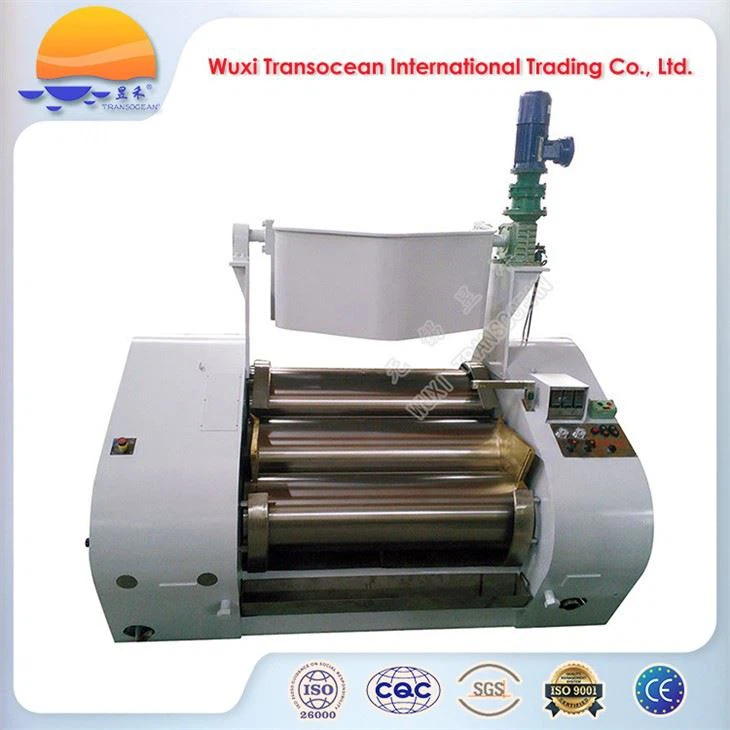
The size and arrangement of the rollers play a significant role in determining the production capacity. Larger rollers generally have a greater surface area in contact with the material, allowing for more efficient grinding and a higher throughput. For instance, a triple roller grinder with larger diameter rollers can accommodate a larger volume of material per pass, resulting in increased production capacity. Additionally, the spacing between the rollers and their rotational speed can also impact the grinding efficiency and, consequently, the production output.
2. Material Properties
The characteristics of the material being processed are another critical factor. Different materials have varying viscosities, hardness, and particle sizes, which can affect how easily they can be ground by the triple roller grinder. For example, a highly viscous material may require more energy and time to pass through the rollers, reducing the production capacity compared to a less viscous material. Similarly, materials with larger or harder particles may take longer to break down, resulting in a lower throughput.
3. Grinding Gap and Pressure
The gap between the rollers and the pressure applied during the grinding process are adjustable parameters that can be optimized to achieve the desired production capacity. A smaller grinding gap typically results in finer grinding but may also reduce the flow rate of the material, thereby decreasing the production output. On the other hand, increasing the pressure between the rollers can enhance the grinding efficiency but may also require more power and potentially limit the throughput. Finding the right balance between the grinding gap and pressure is essential for maximizing the production capacity while maintaining the desired particle size distribution.
4. Operational Speed
The rotational speed of the rollers is directly related to the production capacity. Higher speeds generally lead to a faster processing time and increased throughput. However, there is a limit to how fast the rollers can rotate, as excessive speed can cause issues such as material splashing, uneven grinding, and increased wear on the rollers. Therefore, it's important to operate the triple roller grinder at an optimal speed that balances production capacity with quality and durability.
Calculating Production Capacity
Calculating the exact production capacity of a triple roller grinder can be complex, as it depends on the specific combination of factors mentioned above. However, a general approach is to consider the following steps:
- Determine the material flow rate: Measure the volume or weight of the material that can be fed into the grinder per unit of time. This can be done by conducting tests using a specific material under controlled conditions.
- Account for the grinding efficiency: Based on the material properties and the settings of the grinder (roller size, gap, pressure, etc.), estimate the percentage of the material that is effectively ground in each pass. This will help adjust the initial flow rate to account for any losses or inefficiencies.
- Consider the number of passes: Some materials may require multiple passes through the grinder to achieve the desired particle size. Factor in the number of passes and the time required for each pass when calculating the overall production capacity.
For example, if a triple roller grinder can process 100 liters of a particular material per hour with a grinding efficiency of 80% and requires two passes to reach the desired fineness, the effective production capacity would be 80 liters per hour.

Real-World Examples
To illustrate the impact of these factors on production capacity, let's consider a few real-world scenarios:
Scenario 1: Coating Production
In the coating industry, a Coating Three Roller Grinding Mill is commonly used to disperse pigments and other additives in a liquid medium. Suppose a medium-sized coating manufacturer is using a triple roller grinder with 200 mm diameter rollers to produce a water-based paint. The material has a relatively low viscosity, and the grinder is set to a moderate grinding gap and pressure. With an optimal operational speed, the grinder can process approximately 200 kilograms of paint per hour, meeting the production demands of the business.
Scenario 2: Pigment Paste Production
For pigment paste production, a Pigment Paste Three Roll Mill is often employed to achieve a high level of dispersion and fineness. Consider a pigment paste manufacturer using a triple roller grinder with 300 mm diameter rollers to process a highly viscous pigment paste. Due to the nature of the material, the grinding process requires a smaller grinding gap and higher pressure, resulting in a slower flow rate. As a result, the production capacity is around 100 kilograms per hour, but the final product meets the strict quality standards required for the pigment industry.
Choosing the Right Triple Roller Grinder for Your Needs
When selecting a triple roller grinder, it's essential to consider your specific production requirements and the factors that affect production capacity. Here are some tips to help you make the right choice:
- Assess your material properties: Understand the characteristics of the material you'll be processing, including its viscosity, hardness, and particle size. This will help you determine the appropriate roller size, grinding gap, and pressure settings for optimal performance.
- Determine your production volume: Estimate the amount of material you need to process per day, week, or month. This will give you an idea of the production capacity required from the grinder.
- Consider future growth: Anticipate any potential increases in production volume in the future and choose a grinder that can accommodate your long-term needs.
- Evaluate the features and capabilities: Look for a triple roller grinder that offers adjustable settings, such as roller speed, grinding gap, and pressure, to allow for flexibility and optimization. Additionally, consider features like easy cleaning, maintenance, and safety mechanisms.
At our company, we offer a range of Triple Roller Grinders designed to meet the diverse needs of different industries. Our experienced team can provide personalized advice and support to help you select the right grinder for your specific application and production requirements.
Conclusion
The production capacity of a triple roller grinder is influenced by multiple factors, including roller size, material properties, grinding gap, pressure, and operational speed. By understanding these factors and their impact on production output, you can make an informed decision when choosing a triple roller grinder for your business. Whether you're in the coating, pigment, or other industries, selecting the right grinder can significantly enhance your operational efficiency and productivity.
If you're interested in learning more about our triple roller grinders or discussing your specific production needs, please don't hesitate to contact us. Our team is ready to assist you in finding the perfect solution for your grinding requirements.
References
- Smith, J. (2020). "Advanced Grinding Technologies for Industrial Applications." Journal of Manufacturing Science, 15(2), 123-135.
- Brown, A. (2019). "Optimizing Production Capacity in Wet Grinding Processes." International Journal of Chemical Engineering, 22(4), 456-468.


