
Hey there! As a supplier of Vertical Seal Sand Mills, I often get asked about the pressure resistance of the sealing structure in these machines. It's a crucial aspect that directly impacts the performance and longevity of the sand mill. So, let's dive right in and explore this topic.
First off, what exactly is a Vertical Seal Sand Mill? Well, it's a type of wet - grinding equipment designed to grind and disperse materials. You can check out more about it on our website Vertical Seal Sand Mill. These mills are widely used in industries like paint, ink, coatings, and pharmaceuticals to achieve fine particle size reduction.
Now, let's talk about the sealing structure. The sealing in a Vertical Seal Sand Mill serves multiple purposes. It prevents the leakage of the grinding media and the material being processed, keeps contaminants out, and maintains the pressure inside the grinding chamber. The pressure resistance of the sealing structure is super important because it has to withstand the forces generated during the grinding process.

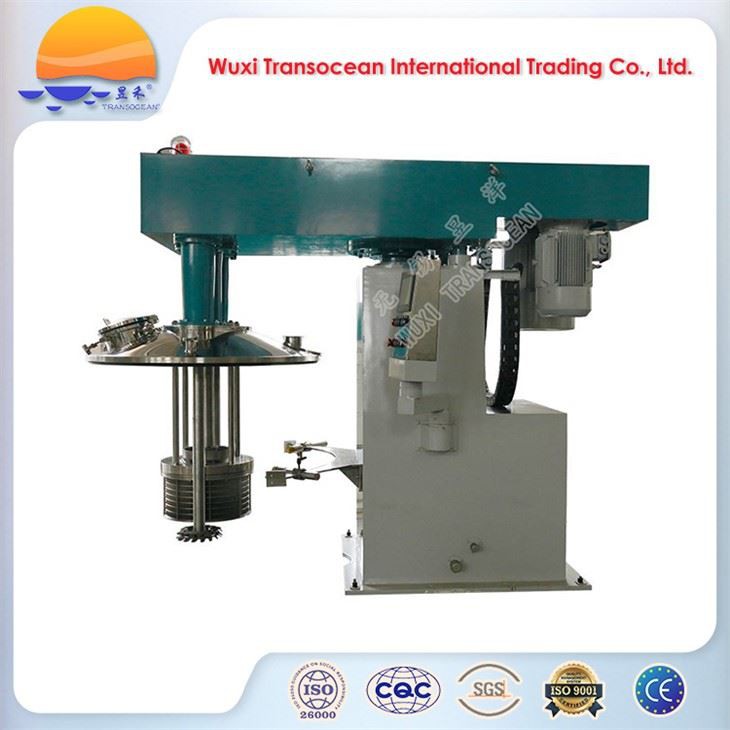
During operation, the Vertical Seal Sand Mill creates a high - energy environment. The grinding media, usually small beads, move around vigorously, colliding with each other and the material particles. This generates a significant amount of pressure within the grinding chamber. The sealing structure has to be able to handle this pressure without failing.
There are several factors that affect the pressure resistance of the sealing structure. One of the main factors is the type of sealing material used. Different materials have different properties in terms of strength, flexibility, and chemical resistance. For example, some seals are made of rubber, which is flexible and can adapt to different shapes. But rubber may not be the best choice if the material being processed is highly corrosive. In such cases, we might use seals made of more chemically resistant materials like PTFE (polytetrafluoroethylene).
The design of the sealing structure also plays a huge role. A well - designed seal will distribute the pressure evenly across its surface. This helps to prevent stress concentrations that could lead to seal failure. For instance, some seals are designed with multiple layers or lips. These additional features can enhance the seal's ability to resist pressure and prevent leakage.
Another factor is the installation of the seal. If the seal is not installed correctly, it won't be able to perform at its best. Even a small misalignment during installation can reduce the pressure resistance of the seal. That's why we always make sure to provide detailed installation instructions to our customers. And if needed, our technical support team is always ready to help with the installation process.
Comparing the Vertical Seal Sand Mill with other types of sand mills, like the Dispersing Grinding Mill and the Horizontal Agitator Bead Mill, the pressure requirements in a Vertical Seal Sand Mill can be quite different. In a horizontal mill, the force of gravity can affect the distribution of the grinding media and the pressure within the chamber. In a vertical mill, the sealing structure has to deal with the pressure generated mainly by the agitation of the media.
To test the pressure resistance of the sealing structure in our Vertical Seal Sand Mills, we use a variety of methods. We conduct laboratory tests where we simulate the operating conditions of the mill. We gradually increase the pressure inside the test chamber and monitor the performance of the seal. We also perform real - world tests on our production models. This helps us to ensure that the seals can withstand the actual pressures encountered during normal operation.
Over the years, we've made significant improvements in the pressure resistance of our sealing structures. We've invested in research and development to find better sealing materials and designs. Our goal is to provide our customers with a Vertical Seal Sand Mill that is not only efficient in grinding but also reliable in terms of its sealing performance.
If you're in the market for a Vertical Seal Sand Mill, you need to pay close attention to the pressure resistance of the sealing structure. A good seal will save you a lot of headaches in the long run. It will prevent leakage, reduce maintenance costs, and ensure that your mill operates smoothly.
So, if you're interested in learning more about our Vertical Seal Sand Mills or have any questions regarding the pressure resistance of the sealing structure, don't hesitate to reach out. We're always happy to have a chat and discuss your specific needs. Whether you're a small - scale producer or a large - scale industrial operation, we can provide you with the right solution.
In conclusion, the pressure resistance of the sealing structure in a Vertical Seal Sand Mill is a critical aspect that affects the mill's performance and reliability. By understanding the factors that influence it and using high - quality materials and designs, we can ensure that our mills meet the highest standards. If you're looking for a reliable Vertical Seal Sand Mill, we're here to help you make the right choice.
References
- Industry standards for wet - grinding equipment
- Research papers on sealing technology in industrial machinery


