
The power consumption of industrial equipment is a crucial factor that businesses must consider, as it directly impacts operational costs and overall efficiency. In the realm of wet grinding equipment, the Vertical Seal Sand Mill has emerged as a popular choice for various industries. As a supplier of Vertical Seal Sand Mills, I am often asked about the power consumption of these machines. In this blog post, I will delve into the factors that influence the power consumption of a Vertical Seal Sand Mill and provide insights to help you make informed decisions.
Understanding the Basics of a Vertical Seal Sand Mill
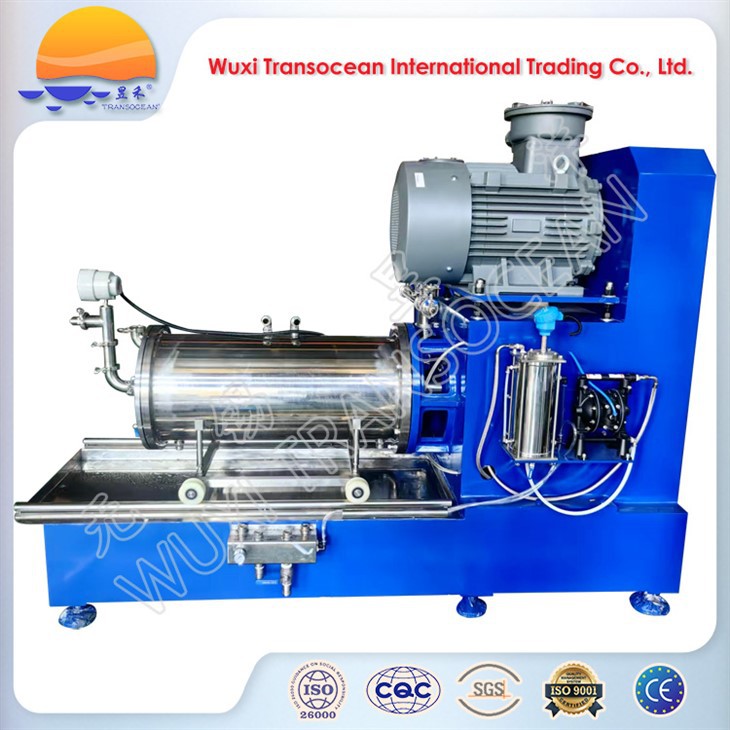
Before we discuss power consumption, it's essential to understand how a Vertical Seal Sand Mill operates. A Vertical Seal Sand Mill is a type of wet grinding equipment used to reduce the particle size of materials in a liquid medium. It consists of a vertical grinding chamber filled with grinding media, such as beads or balls. The material to be ground is pumped into the chamber, and the grinding media, agitated by a rotating shaft, break down the particles through impact and shear forces.
The design of the Vertical Seal Sand Mill offers several advantages, including efficient grinding, high throughput, and easy maintenance. It is commonly used in industries such as paints, coatings, inks, pharmaceuticals, and ceramics.
Factors Influencing Power Consumption
The power consumption of a Vertical Seal Sand Mill is influenced by several factors, which can be broadly categorized into machine-related factors and process-related factors.
Machine-Related Factors
- Motor Power Rating: The motor power rating is one of the most significant factors affecting power consumption. A higher power rating generally means the mill can handle larger volumes of material and operate at higher speeds, but it also consumes more electricity. When selecting a Vertical Seal Sand Mill, it's important to choose a motor power rating that matches your production requirements.
- Grinding Chamber Design: The design of the grinding chamber can also impact power consumption. A well-designed chamber can ensure efficient grinding and reduce the energy required to break down the particles. Factors such as the shape, size, and internal structure of the chamber can affect the flow of the material and the distribution of the grinding media, which in turn influence power consumption.
- Grinding Media: The type, size, and density of the grinding media used in the mill can have a significant impact on power consumption. Heavier and larger grinding media require more energy to move and can increase the load on the motor. Additionally, the wear rate of the grinding media can also affect power consumption, as worn media may require more energy to achieve the desired grinding results.
Process-Related Factors
- Material Properties: The properties of the material being ground, such as its viscosity, hardness, and particle size distribution, can influence power consumption. Materials with higher viscosity or hardness require more energy to break down, resulting in increased power consumption. Similarly, materials with a wide particle size distribution may require more energy to achieve a uniform particle size.
- Feed Rate: The feed rate of the material into the mill is another important factor. A higher feed rate means more material needs to be processed, which can increase the load on the motor and result in higher power consumption. However, a very low feed rate may also be inefficient, as the mill may not be operating at its optimal capacity.
- Grinding Time and Fineness: The desired grinding time and fineness of the final product also affect power consumption. Longer grinding times and finer particle sizes generally require more energy, as the material needs to be subjected to more intense grinding forces.
Calculating Power Consumption
Calculating the exact power consumption of a Vertical Seal Sand Mill can be complex, as it depends on multiple factors. However, a general estimate can be obtained using the following formula:
[ P = \frac{W \times t}{3600} ]

Where:
- ( P ) is the power consumption in kilowatt-hours (kWh)
- ( W ) is the power rating of the motor in kilowatts (kW)
- ( t ) is the operating time in hours
It's important to note that this formula provides only a rough estimate, and the actual power consumption may vary depending on the specific operating conditions and the efficiency of the mill.
Strategies to Reduce Power Consumption
As a supplier, we understand the importance of reducing power consumption to help our customers save costs and improve efficiency. Here are some strategies that can be implemented to reduce the power consumption of a Vertical Seal Sand Mill:
- Optimize the Grinding Process: By adjusting the feed rate, grinding time, and other process parameters, it's possible to achieve the desired grinding results with less energy. For example, using a pre-grinding step to reduce the initial particle size of the material can significantly reduce the energy required in the Vertical Seal Sand Mill.
- Choose the Right Grinding Media: Selecting the appropriate type, size, and density of the grinding media can improve grinding efficiency and reduce power consumption. For example, using smaller grinding media can increase the surface area available for grinding, resulting in more efficient particle size reduction.
- Maintain the Mill Regularly: Regular maintenance of the Vertical Seal Sand Mill, including checking the motor, bearings, and other components, can ensure optimal performance and reduce energy waste. Worn or damaged parts should be replaced promptly to prevent increased power consumption.
Comparison with Other Types of Sand Mills
When considering the power consumption of a Vertical Seal Sand Mill, it's also useful to compare it with other types of sand mills, such as the Horizontal Disc Type Sand Mill and the Vertical Bead Mill.
- Horizontal Disc Type Sand Mill: The Horizontal Disc Type Sand Mill typically has a different design and operating principle compared to the Vertical Seal Sand Mill. While it may offer high grinding efficiency in some applications, its power consumption can vary depending on factors such as the disc design and the speed of rotation. In general, the power consumption of a Horizontal Disc Type Sand Mill may be similar to or slightly higher than that of a Vertical Seal Sand Mill, depending on the specific configuration and operating conditions.
- Vertical Bead Mill: The Vertical Bead Mill is another type of wet grinding equipment that is similar in design to the Vertical Seal Sand Mill. However, the power consumption of a Vertical Bead Mill may be influenced by factors such as the bead size and the filling ratio of the grinding chamber. In some cases, a Vertical Bead Mill may consume less power than a Vertical Seal Sand Mill, especially when processing materials with lower viscosity.
Conclusion
The power consumption of a Vertical Seal Sand Mill is influenced by a variety of factors, including machine-related factors such as motor power rating and grinding chamber design, and process-related factors such as material properties and feed rate. By understanding these factors and implementing strategies to reduce power consumption, businesses can optimize their operations and save costs.
As a supplier of Vertical Seal Sand Mills, we are committed to providing our customers with high-quality equipment that offers efficient and cost-effective grinding solutions. If you are interested in learning more about our Vertical Seal Sand Mills or discussing your specific requirements, please feel free to contact us for a consultation. We look forward to working with you to meet your grinding needs.
References
- Perry, R. H., & Green, D. W. (1997). Perry's Chemical Engineers' Handbook. McGraw-Hill.
- Svarovsky, L. (1990). Solid-Liquid Separation. Butterworth-Heinemann.


