
As a supplier of Triple Roller Grinders, I've witnessed firsthand the transformative impact these machines have on various industries. The grinding principle of a triple roller grinder is a fascinating process that combines mechanical precision with scientific principles to achieve exceptional results. In this blog, I'll delve into the intricacies of this process, exploring how it works and why it's so effective.
The Basics of a Triple Roller Grinder
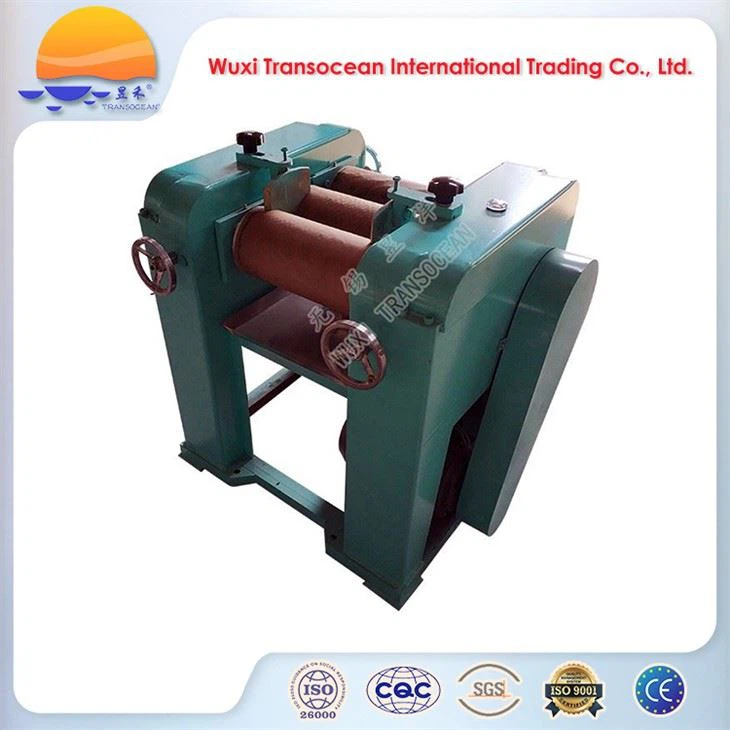
A triple roller grinder consists of three horizontally arranged rollers that rotate at different speeds. These rollers are typically made of high-quality steel or ceramic, ensuring durability and resistance to wear. The rollers are mounted on a sturdy frame and are driven by a motor, which provides the necessary power to rotate them.
The three rollers are named the feed roller, the center roller, and the apron roller, each playing a crucial role in the grinding process. The feed roller is the first roller that the material comes into contact with. It rotates at a relatively slow speed and is responsible for feeding the material into the grinder. The center roller rotates at a faster speed than the feed roller, creating a shearing force between the two rollers. This shearing force helps to break down the material into smaller particles. The apron roller rotates at the fastest speed of the three and is responsible for further refining the particles and spreading the material evenly across the surface of the roller.
The Grinding Principle
The grinding principle of a triple roller grinder is based on the concept of shearing and compression. When the material is fed into the grinder, it is caught between the feed roller and the center roller. As the rollers rotate, the material is subjected to a shearing force, which causes it to break down into smaller particles. The shearing force is created by the difference in speed between the two rollers. The faster the center roller rotates relative to the feed roller, the greater the shearing force and the finer the particles will be.
Once the material has passed through the first gap between the feed roller and the center roller, it moves on to the second gap between the center roller and the apron roller. In this gap, the material is subjected to another shearing force, as well as a compression force. The compression force is created by the pressure between the two rollers, which helps to further break down the particles and improve the dispersion of the material.
The final step in the grinding process is the spreading of the material across the surface of the apron roller. As the apron roller rotates, it picks up the material from the center roller and spreads it evenly across its surface. This helps to ensure that the material is uniformly ground and that there are no large particles or agglomerates left behind.
Advantages of the Triple Roller Grinder
The triple roller grinder offers several advantages over other types of grinding machines. One of the main advantages is its ability to produce a very fine and uniform particle size. The shearing and compression forces created by the three rollers are very effective at breaking down the material into small particles, resulting in a high-quality product.
Another advantage of the triple roller grinder is its versatility. It can be used to grind a wide variety of materials, including pigments, paints, inks, adhesives, and cosmetics. This makes it a popular choice for many different industries, from manufacturing to research and development.
The triple roller grinder is also relatively easy to operate and maintain. It has a simple design and few moving parts, which means that it is less likely to break down and requires less maintenance than other types of grinding machines. Additionally, the rollers can be easily adjusted to achieve the desired particle size, making it a very flexible and adaptable machine.
Applications of the Triple Roller Grinder
The triple roller grinder is used in a wide variety of applications, including:
- Pigment and Paint Production: The triple roller grinder is commonly used in the production of pigments and paints. It is used to grind the pigments into a fine powder and to disperse them evenly in the paint base. This helps to ensure that the paint has a consistent color and texture and that it adheres well to the surface. Pigment Paste Three Roll Mill is a great example of a triple roller grinder used in this application.
- Ink Manufacturing: In the ink manufacturing industry, the triple roller grinder is used to grind the ink pigments and to disperse them in the ink vehicle. This helps to ensure that the ink has a smooth and consistent flow and that it prints well on paper or other substrates. Triple Roller Mill for Paint can also be used in ink manufacturing.
- Adhesive and Sealant Production: The triple roller grinder is used in the production of adhesives and sealants to grind the raw materials and to disperse them evenly in the adhesive or sealant base. This helps to ensure that the adhesive or sealant has a strong bond and that it is resistant to moisture and other environmental factors.
- Cosmetics Manufacturing: In the cosmetics industry, the triple roller grinder is used to grind the pigments and other raw materials used in the production of cosmetics. It is used to ensure that the cosmetics have a smooth and consistent texture and that they are free of lumps and other imperfections.
Conclusion
The grinding principle of a triple roller grinder is a complex and fascinating process that combines mechanical precision with scientific principles to achieve exceptional results. The shearing and compression forces created by the three rollers are very effective at breaking down the material into small particles, resulting in a high-quality product. The triple roller grinder offers several advantages over other types of grinding machines, including its ability to produce a very fine and uniform particle size, its versatility, and its ease of operation and maintenance. It is used in a wide variety of applications, from pigment and paint production to ink manufacturing and cosmetics production.
If you're interested in learning more about our Triple Roller Grinder or discussing your specific grinding needs, please don't hesitate to contact us. We'd be happy to provide you with more information and to help you find the right solution for your business.

References
- "Principles of Grinding" by John T. Black
- "Handbook of Industrial Mixing: Science and Practice" by Edward L. Paul, Victor A. Atiemo-Obeng, and Suzanne M. Kresta
- "The Chemistry and Physics of Coatings" by Peter H. Townsend


