
The basket grinding mill is a piece of equipment commonly used in the wet grinding process, which has a wide range of applications in industries such as coatings, inks, and pigments. As a supplier of Basket Grinding Mill, we often receive inquiries from customers about how the rotational speed of the basket affects the grinding process. In this blog, we will delve into this topic to provide a comprehensive understanding.
Basic Working Principle of Basket Grinding Mill
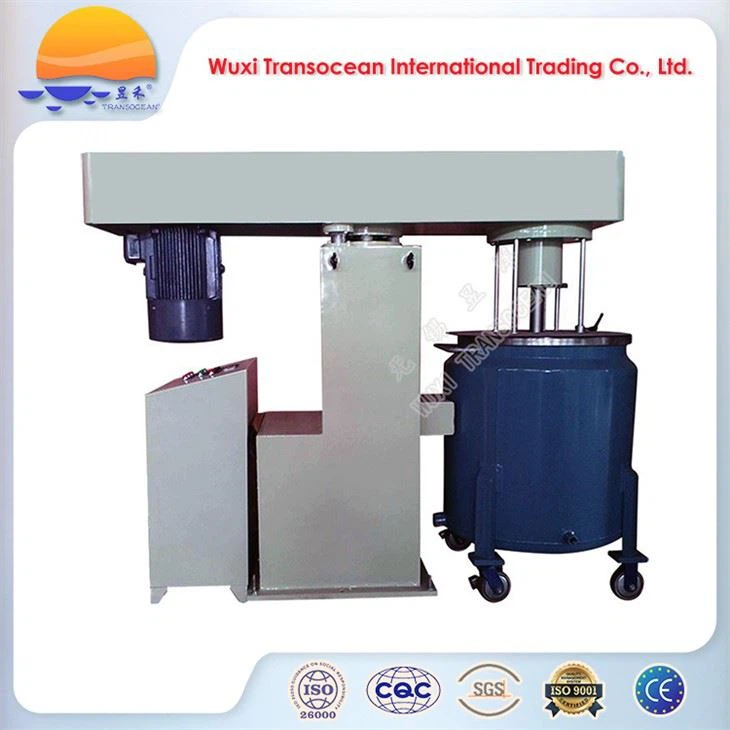
Before discussing the impact of basket rotational speed, it is essential to understand the basic working principle of the basket grinding mill. The basket of the grinding mill is filled with grinding media, typically small beads made of materials like zirconia or glass. When the basket rotates, the grinding media inside are set in motion. The material to be ground is introduced into the basket, and the collision and shearing forces generated by the moving grinding media break down the particles of the material, achieving the grinding effect.
Impact of Rotational Speed on Grinding Efficiency
One of the most significant effects of the basket's rotational speed is on grinding efficiency. Generally speaking, as the rotational speed increases, the kinetic energy of the grinding media also increases. Higher kinetic energy means that the grinding media can hit the particles of the material with greater force, leading to more effective particle breakage. For example, in the production of high - gloss coatings, a faster rotational speed can quickly reduce the particle size of the pigments, thereby improving the dispersion of the pigments in the coating and enhancing the gloss of the final product.
However, there is a limit to this relationship. If the rotational speed is too high, the grinding media may start to move in a chaotic manner. Instead of orderly grinding the particles, they may collide with each other more frequently, leading to energy dissipation. This not only wastes energy but also reduces the actual grinding efficiency. Moreover, excessive rotational speed can cause excessive wear on the basket and the grinding media, increasing the cost of equipment maintenance and replacement.
Influence on Particle Size Distribution
The rotational speed of the basket also has a profound impact on the particle size distribution of the ground material. At a relatively low rotational speed, the grinding process is relatively gentle. The larger particles are more likely to be ground first, but the reduction in particle size is relatively slow. As a result, the particle size distribution of the final product is relatively wide. This may be suitable for some applications where a certain range of particle sizes is required, such as in some building coatings where a wide particle size distribution can improve the covering power of the coating.
On the other hand, when the rotational speed is increased, the grinding process becomes more intense. Smaller particles can also be effectively ground, resulting in a narrower particle size distribution. In industries such as high - precision inks, a narrow particle size distribution is crucial for ensuring the print quality and color consistency of the ink. By adjusting the rotational speed of the basket grinding mill, we can precisely control the particle size distribution of the product to meet the specific requirements of different industries.

Impact on Heat Generation
Heat generation is another important factor affected by the rotational speed of the basket. When the basket rotates, friction occurs between the grinding media, the material being ground, and the inner wall of the basket. As the rotational speed increases, the frictional force also increases, leading to more heat generation. In some heat - sensitive materials, such as certain polymers used in coatings, excessive heat can cause the material to degrade or change its chemical properties.
To address this issue, some advanced Basket Grinding Mill models are equipped with cooling systems. These systems can remove the heat generated during the grinding process, allowing the mill to operate at a relatively high rotational speed without causing damage to the material. However, even with cooling systems, it is still necessary to carefully select the appropriate rotational speed to balance the grinding efficiency and heat generation.
Impact on Viscosity of the Material
The viscosity of the material being ground is also related to the basket's rotational speed. As the rotational speed increases, the shearing force acting on the material also increases. This shearing force can break down the intermolecular bonds in the material, reducing its viscosity. In some cases, a lower viscosity is beneficial for the grinding process, as it allows the grinding media to move more freely and improves the contact between the media and the particles.
However, if the viscosity is reduced too much, the grinding media may settle at the bottom of the basket, reducing the grinding effect. Therefore, when adjusting the rotational speed, it is necessary to consider the initial viscosity of the material and the desired final viscosity. For example, in the production of some high - viscosity adhesives, a proper rotational speed needs to be selected to ensure that the viscosity is reduced to an appropriate level for further processing without causing the grinding media to settle.
Comparison with Other Grinding Mills
In comparison with other types of grinding mills, such as Dispersing Grinding Mill and Vertical Seal Sand Mill, the basket grinding mill has its own characteristics in terms of the impact of rotational speed. The dispersing grinding mill mainly relies on the high - speed rotation of the dispersing disc to disperse and grind the material. The impact of rotational speed on it is more related to the dispersion effect of the material. In contrast, the basket grinding mill focuses more on the grinding effect achieved by the movement of the grinding media inside the basket.
The vertical seal sand mill has a different structure, with the grinding chamber being vertical. The influence of rotational speed on it is also affected by factors such as the flow pattern of the material in the vertical chamber. The basket grinding mill, with its unique basket - type design, allows for a more direct control of the grinding process through the adjustment of the basket's rotational speed.
Optimal Rotational Speed Selection
Selecting the optimal rotational speed for the basket grinding mill depends on various factors, including the nature of the material being ground, the desired particle size, and the production requirements. For soft materials, a relatively lower rotational speed may be sufficient to achieve the desired grinding effect. For hard and tough materials, a higher rotational speed may be required, but it should still be within a reasonable range to avoid the problems mentioned above.
In practice, it is often necessary to conduct some preliminary tests. By adjusting the rotational speed step - by - step and analyzing the particle size distribution, grinding efficiency, and other parameters of the ground material, we can determine the most suitable rotational speed for a specific application. Our company, as a professional supplier of Basket Grinding Mill, can provide customers with technical support and guidance in this regard.
Conclusion
In conclusion, the rotational speed of the basket in a basket grinding mill has a significant impact on the grinding process, including grinding efficiency, particle size distribution, heat generation, viscosity, and more. By understanding these relationships, we can better control the grinding process to produce high - quality products.
If you are interested in our basket grinding mills or have any questions about the grinding process, please feel free to contact us. Our professional team is ready to provide you with detailed information and customized solutions to meet your specific production needs. Let's work together to achieve excellent grinding results in your industry.
References
- S. S. Tarasov, "Principles of Grinding Technology", 2nd Edition, Springer, 2018.
- R. H. Perry, D. W. Green, "Perry's Chemical Engineers' Handbook", 8th Edition, McGraw - Hill, 2008.
- M. E. Fitzpatrick, "Size Reduction and Milling", Wiley - VCH, 2004.


