
Hey there! As a supplier of dosing systems, I've gotten tons of questions about how these nifty contraptions work. So, I thought I'd break down the control mechanism of a dosing system in a way that's easy to understand.
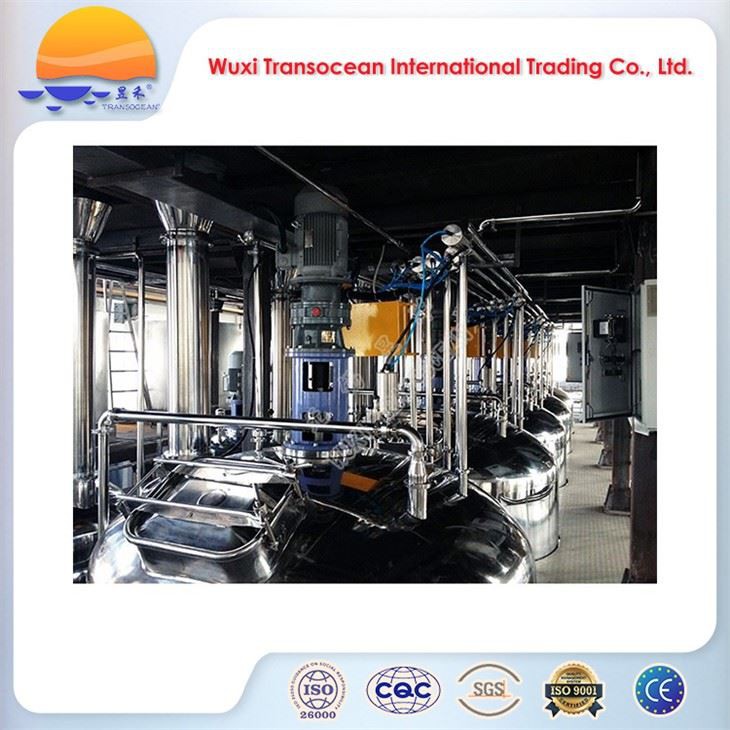

First off, let's talk about what a dosing system is. Simply put, it's a device that precisely dispenses a specific amount of a substance - could be a powder or a liquid - into a process. For instance, in a chemical manufacturing plant, a dosing system might be used to add a precise amount of a catalyst to a reaction. Or in a water treatment facility, it could be used to add the right amount of disinfectant to the water.
Now, let's dive into the control mechanism. At the heart of every dosing system, there are three main components: a controller, a dosing pump, and a sensor.
The controller is like the brain of the system. It's the part that tells the dosing pump how much of the substance to dispense. Think of it as a little computer that's programmed with a specific set of instructions. These instructions could be based on a pre - set volume, a specific time interval, or a feedback loop from the sensor.
The dosing pump is the muscle. It's responsible for actually moving the substance from its storage container to the process. There are different types of dosing pumps, like diaphragm pumps, peristaltic pumps, and piston pumps. Each type has its own advantages and is suitable for different applications. For example, diaphragm pumps are great for handling corrosive liquids, while peristaltic pumps are ideal for applications where you need to avoid contamination.
The sensor is the eyes and ears of the system. It provides real - time information about the process to the controller. This information could be about the level of the substance in the storage container, the flow rate of the substance being dispensed, or the concentration of a particular chemical in the process. Based on this information, the controller can adjust the operation of the dosing pump to ensure that the right amount of the substance is being dispensed at all times.
Let's take a closer look at how these components work together.
Closed - Loop Control
One of the most common control mechanisms is the closed - loop control system. In this setup, the sensor continuously monitors a specific parameter of the process, like the pH level of a liquid or the concentration of a powder in a mixture. The sensor sends this information to the controller.
If the measured parameter is different from the desired setpoint, the controller will adjust the operation of the dosing pump. For example, if you're dosing a chemical to adjust the pH of a liquid and the pH is too low, the controller will tell the dosing pump to add more of the chemical until the pH reaches the desired level. This continuous feedback loop ensures that the process remains stable and that the right amount of the substance is always being added.
Open - Loop Control
On the other hand, there's also the open - loop control system. In an open - loop system, the controller operates based on pre - set instructions without any feedback from the sensor. For example, you might program the controller to dispense a fixed amount of a substance at regular intervals. This type of control mechanism is simpler and less expensive, but it's not as accurate as a closed - loop system. It's suitable for applications where the process conditions are relatively stable and where a high degree of precision isn't required.
Programmable Logic Controllers (PLCs)
Many modern dosing systems use Programmable Logic Controllers (PLCs) as the controller. PLCs are versatile and can be easily programmed to handle complex control tasks. They can store multiple sets of instructions, allowing you to switch between different dosing profiles depending on the requirements of the process.
PLCs also offer the advantage of being able to communicate with other devices in the plant, like human - machine interfaces (HMIs) and supervisory control and data acquisition (SCADA) systems. This means that operators can monitor and control the dosing system from a central location, making the process more efficient and easier to manage.
Control for Different Types of Dosing Systems
When it comes to different types of dosing systems, there are some specific considerations.
Dosing System for Powders
For a Dosing System for Powders, the control mechanism needs to take into account the flow characteristics of the powder. Powders can be tricky to handle because they can clump together, bridge in the storage container, or flow unevenly.
To ensure accurate dosing, the controller might need to adjust the speed of a screw feeder or a vibrating conveyor that moves the powder. The sensor could be used to monitor the level of the powder in the storage container or the weight of the powder being dispensed.
Dosing System for Liquids
A Dosing System for Liquids has its own set of challenges. The viscosity of the liquid can affect the performance of the dosing pump. For example, a thick liquid might require a more powerful pump to ensure proper flow.
The sensor in a liquid dosing system could be used to measure the flow rate, the pressure, or the temperature of the liquid. The controller can then adjust the pump speed or the opening of a valve to maintain the desired dosing rate.
Conclusion
So, there you have it - a rundown of the control mechanism of a dosing system. Whether you're dealing with powders or liquids, the key is to have a well - designed system that combines a smart controller, a reliable dosing pump, and an accurate sensor.
If you're in the market for a dosing system, or if you have any questions about how our dosing systems work, don't hesitate to reach out. We're here to help you find the perfect solution for your specific needs. Whether it's a simple open - loop system or a complex closed - loop setup with a PLC, we've got you covered. Let's have a chat and see how we can optimize your dosing process.
References
- "Process Control and Instrumentation Technology" by Betty L. Albrecht
- "Pump Handbook" by Igor J. Karassik et al.


