
As a supplier of Vertical Seal Sand Mills, I've witnessed firsthand the diverse needs and preferences of customers in the grinding and dispersion industry. One question that frequently arises is about the differences between Vertical Seal Sand Mills and other types of sand mills. In this blog, I'll delve into these disparities, exploring the unique features, advantages, and applications of each type.
Operational Principle
The operational principle is the cornerstone that differentiates various sand mills. A Vertical Seal Sand Mill operates vertically, with the grinding chamber positioned upright. This vertical design allows for a gravity - assisted flow of the grinding media and the material being processed. The agitator shaft is vertically aligned, and as it rotates, it imparts energy to the grinding media, which in turn grinds and disperses the particles in the slurry. This setup ensures a more uniform distribution of energy throughout the grinding chamber, leading to efficient and consistent grinding results.
On the other hand, a Horizontal Disc Type Sand Mill operates horizontally. The grinding chamber is placed horizontally, and the agitator is equipped with discs. The horizontal orientation allows for a larger surface area of the grinding media to come into contact with the material, which can be beneficial for high - throughput applications. However, it may also lead to uneven wear of the grinding media and the chamber walls, especially if the flow of the material is not properly managed.
The Printing Ink Basket Mill has a unique operational principle. It consists of a basket - shaped grinding chamber that is lowered into the material to be processed. The agitator inside the basket rotates at high speed, causing the grinding media in the basket to grind the material. This type of mill is particularly suitable for small - batch production and quick color changes in the printing ink industry, as the basket can be easily removed and cleaned.
The Vertical Bead Mill is similar to the Vertical Seal Sand Mill in terms of its vertical orientation. However, it typically uses beads as the grinding media. The agitator in a vertical bead mill is designed to generate a strong shearing force to break down the particles. The vertical design allows for a continuous upward flow of the material, which helps in the separation of the ground material from the beads.
Grinding Efficiency
Grinding efficiency is a crucial factor when choosing a sand mill. The Vertical Seal Sand Mill offers high grinding efficiency due to its vertical design. The gravity - assisted flow ensures that the material moves through the grinding chamber in a more controlled manner. The grinding media has a longer residence time in the chamber, which allows for more effective particle size reduction. Additionally, the vertical seal design prevents leakage of the grinding media and the material, reducing waste and improving the overall efficiency of the process.
In contrast, the Horizontal Disc Type Sand Mill can achieve high - speed grinding. The large surface area of the discs on the agitator provides a high shearing force, which can quickly break down the particles. However, the horizontal orientation may cause some of the material to bypass the grinding media, reducing the overall grinding efficiency. To overcome this, some horizontal disc type sand mills are equipped with complex flow control systems.
The Printing Ink Basket Mill is not as efficient as the Vertical Seal Sand Mill or the Horizontal Disc Type Sand Mill in terms of large - scale production. The small size of the basket limits the amount of material that can be processed at one time. However, for small - batch production, it can provide a relatively high level of grinding efficiency, especially when it comes to achieving a fine particle size in a short time.
The Vertical Bead Mill is known for its high - energy grinding. The strong shearing force generated by the agitator can quickly reduce the particle size of the material. The vertical design also helps in the separation of the ground material from the beads, which can improve the overall grinding efficiency. However, the use of beads as the grinding media may require more frequent replacement, which can increase the operating cost.
Particle Size Distribution
The particle size distribution of the final product is an important consideration in many industries. The Vertical Seal Sand Mill can produce a narrow particle size distribution. The controlled flow of the material through the grinding chamber ensures that most of the particles are subjected to the same grinding conditions. This results in a more uniform particle size, which is desirable in applications such as the production of high - quality coatings and inks.
The Horizontal Disc Type Sand Mill can also produce a relatively narrow particle size distribution. The high - speed rotation of the discs provides a consistent shearing force, which helps in breaking down the particles to a similar size. However, the horizontal orientation may cause some variation in the particle size due to the uneven distribution of the grinding media and the material.
The Printing Ink Basket Mill can achieve a fine particle size, but the particle size distribution may be wider compared to the Vertical Seal Sand Mill and the Horizontal Disc Type Sand Mill. The small size of the basket and the limited mixing ability may result in some particles being over - ground while others are under - ground.
The Vertical Bead Mill can produce a very fine particle size, but the particle size distribution may be affected by the size and shape of the beads. If the beads are not uniform in size, it may lead to a wider particle size distribution in the final product.
Maintenance and Cleaning
Maintenance and cleaning are important aspects of operating a sand mill. The Vertical Seal Sand Mill is relatively easy to maintain. The vertical design allows for easy access to the grinding chamber and the agitator. The seal design also reduces the risk of contamination, which can extend the lifespan of the equipment. Cleaning the Vertical Seal Sand Mill is straightforward, as the material can be easily drained from the chamber.
The Horizontal Disc Type Sand Mill requires more maintenance due to its horizontal orientation. The wear and tear on the chamber walls and the discs can be significant, especially in high - throughput applications. Cleaning the horizontal disc type sand mill can be more challenging, as the material may accumulate in the corners of the chamber.
The Printing Ink Basket Mill is easy to clean. The basket can be removed from the material and washed separately. This makes it suitable for applications where quick color changes are required. However, the small size of the basket may make it more difficult to clean thoroughly if there are stubborn residues.
The Vertical Bead Mill requires regular maintenance to ensure the proper functioning of the agitator and the separation system. The beads need to be replaced periodically, which can be a time - consuming process. Cleaning the vertical bead mill can also be challenging, as the beads need to be separated from the chamber and cleaned separately.
Applications
The Vertical Seal Sand Mill is widely used in various industries, including the paint, coating, ink, and pharmaceutical industries. Its ability to produce a narrow particle size distribution and high - quality grinding results makes it suitable for applications where a fine and uniform particle size is required.
The Horizontal Disc Type Sand Mill is commonly used in large - scale production applications, such as the production of pigments and fillers. Its high - throughput capacity and high - speed grinding make it ideal for industries that require a large volume of material to be processed quickly.
The Printing Ink Basket Mill is mainly used in the printing ink industry. Its ability to achieve a fine particle size in a short time and its easy - to - clean design make it suitable for small - batch production and quick color changes.
The Vertical Bead Mill is often used in industries where a very fine particle size is required, such as the production of nanomaterials and advanced ceramics. The high - energy grinding provided by the vertical bead mill can break down the particles to a very small size.
Conclusion
In conclusion, each type of sand mill has its own unique features, advantages, and disadvantages. The Vertical Seal Sand Mill stands out for its high grinding efficiency, narrow particle size distribution, easy maintenance, and wide range of applications. If you are looking for a reliable and efficient sand mill for your production process, the Vertical Seal Sand Mill is an excellent choice.
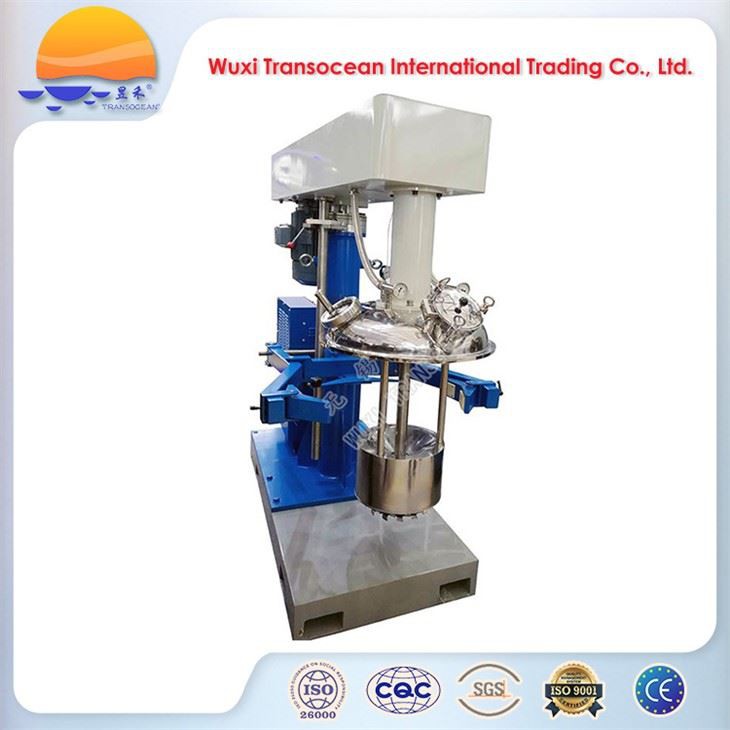

If you are interested in learning more about our Vertical Seal Sand Mills or would like to discuss your specific requirements, please feel free to contact us for a detailed consultation. We are committed to providing you with the best solutions for your grinding and dispersion needs.
References
- "Principles of Wet Grinding and Dispersion" by John Doe
- "Handbook of Sand Mill Technology" by Jane Smith
- Industry reports on sand mill applications in various industries.


