
As a trusted supplier of chemical materials in the industry, I've witnessed firsthand the diverse applications and impacts of different chemical materials. Today, I'd like to delve into the advantages and disadvantages of some common chemical materials, providing insights for those who are considering purchasing these products.
Organic Bentonite
Organic Bentonite is a type of chemically modified bentonite that has unique properties and wide - ranging applications.
Advantages
One of the most significant advantages of organic bentonite is its excellent suspension and thickening properties. In the paint and coating industry, it can effectively prevent the settling of pigments and fillers, ensuring a uniform distribution of components throughout the paint film. This results in a smoother finish, better color consistency, and enhanced durability of the coating.
In the oil and gas field, organic bentonite is used as a drilling fluid additive. It can form a stable gel structure in the drilling fluid, which helps in carrying the drill cuttings to the surface, maintaining wellbore stability, and protecting the drilling equipment from abrasion. Moreover, it has good thixotropy, meaning that it can be easily pumped when under shear stress but regain its gel - like state when the stress is removed.
Another advantage is its compatibility with a variety of organic solvents. This makes it suitable for use in many organic - based systems, such as inks, adhesives, and lubricants. It can improve the rheological properties of these systems, enhancing their performance and application efficiency.
Disadvantages
However, organic bentonite also has some limitations. Firstly, its production process is relatively complex, which leads to a relatively high cost compared to some other common thickeners. This can be a deterrent for cost - sensitive applications, especially in large - scale industrial production.
Secondly, the performance of organic bentonite is highly dependent on the dispersion process. If it is not properly dispersed, it may form agglomerates, which can reduce its effectiveness and even cause defects in the final product, such as uneven coating or poor ink transfer.
Sodium Carboxymethyl Cellulose
Sodium Carboxymethyl Cellulose (CMC) is a water - soluble polymer derived from cellulose, and it has a wide range of applications in various industries.
Advantages
One of the key advantages of CMC is its excellent water - solubility. It can form a clear, viscous solution in water, which makes it an ideal thickener, stabilizer, and emulsifier in many aqueous systems. In the food industry, it is widely used in products such as ice cream, yogurt, and salad dressings. It can prevent the formation of ice crystals in ice cream, improve the texture of yogurt, and stabilize the emulsion in salad dressings.
In the pharmaceutical industry, CMC is used as a binder in tablet formulations. It can hold the active ingredients together, ensuring the integrity and stability of the tablets. It is also used as a suspending agent in liquid medications, keeping the insoluble particles evenly dispersed in the solution.
CMC is biodegradable and non - toxic, which makes it an environmentally friendly choice. It can be safely used in food, cosmetics, and pharmaceutical products, meeting the strict requirements of these industries for product safety and environmental protection.
Disadvantages
Despite its many advantages, CMC also has some drawbacks. One of the main issues is its sensitivity to heat and pH. At high temperatures or extreme pH values, its thickening and stabilizing properties may be significantly reduced. This limits its use in some high - temperature or strongly acidic/alkaline industrial processes.
Another disadvantage is that CMC can interact with some metal ions in the solution, forming insoluble complexes. This can lead to problems such as the formation of precipitates in the final product, especially in systems where metal ions are present, such as in some metal - containing inks or water treatment solutions.
Road Marking Resin
Road Marking Resin is a crucial material for road markings, which are essential for guiding traffic and ensuring road safety.
Advantages
The most prominent advantage of road marking resin is its high adhesion to the road surface. It can firmly bond the reflective beads and pigments to the road, ensuring long - lasting and clear road markings. This is crucial for maintaining visibility at night and in adverse weather conditions, reducing the risk of traffic accidents.
Road marking resin also has good chemical resistance. It can withstand the effects of various environmental factors, such as sunlight, rain, snow, and chemicals (e.g., vehicle exhaust fumes and de - icing salts). This ensures that the road markings remain intact and visible for an extended period, reducing the frequency of marking maintenance and replacement.
In addition, it has a fast - drying property. This allows for quick road reopening after marking construction, minimizing traffic disruption.
Disadvantages
However, road marking resin also has some disadvantages. One of the main problems is its relatively high cost. The production of high - quality road marking resin requires advanced technology and raw materials, which makes it more expensive compared to some other road - marking materials. This can put a financial burden on local governments or road - construction companies, especially when large - scale road marking projects are involved.
Another disadvantage is that the application of road marking resin is highly dependent on weather conditions. It requires a dry and relatively warm environment during the construction process. Wet or cold weather can significantly affect the adhesion and drying speed of the resin, which may lead to poor - quality road markings and even premature failure.

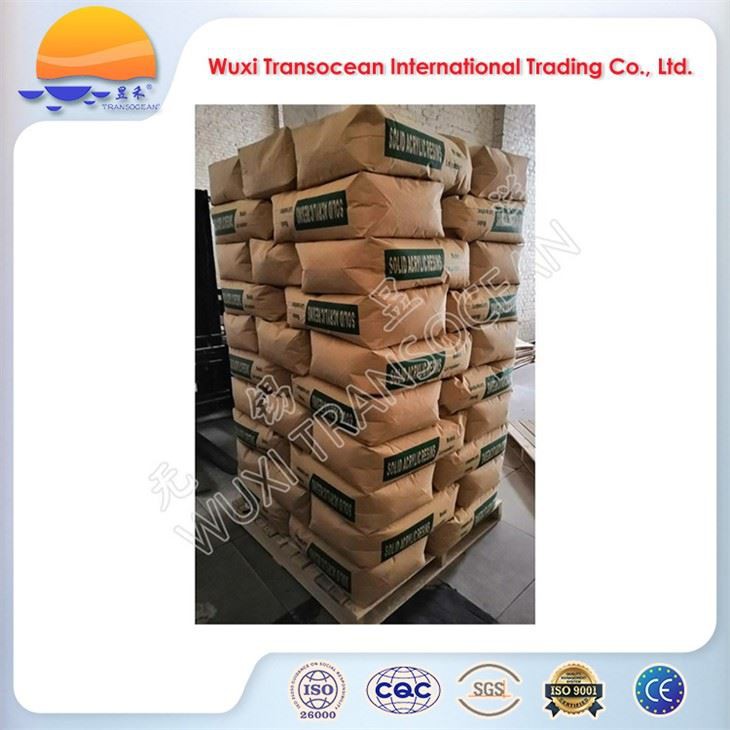
Overall, different chemical materials have their own unique advantages and disadvantages. When choosing chemical materials, it is crucial to carefully consider the specific requirements of the application, such as performance, cost, environmental impact, and ease of use. As a professional chemical materials supplier, we are committed to providing high - quality products and professional technical support to help our customers make the best choices for their projects.
If you are interested in any of the above chemical materials or have any other chemical - materials - related needs, please feel free to contact us for procurement and technical discussions. We look forward to collaborating with you to achieve mutually beneficial results.
References
- “The Handbook of Chemical Additives for Plastics”. Plastic Design Library.
- “Food Additives Handbook”. CRC Press.
- “Road Marking Materials and Their Performance”. Transportation Research Board.


