
As a supplier of triple roller grinders, I've witnessed firsthand the critical role these machines play in various industries, from paint and ink production to pharmaceuticals and cosmetics. The grinding quality of a triple roller grinder directly impacts the final product's quality, performance, and marketability. In this blog, I'll share some practical tips and strategies to help you improve the grinding quality of your triple roller grinder.
Understanding the Basics of Triple Roller Grinders
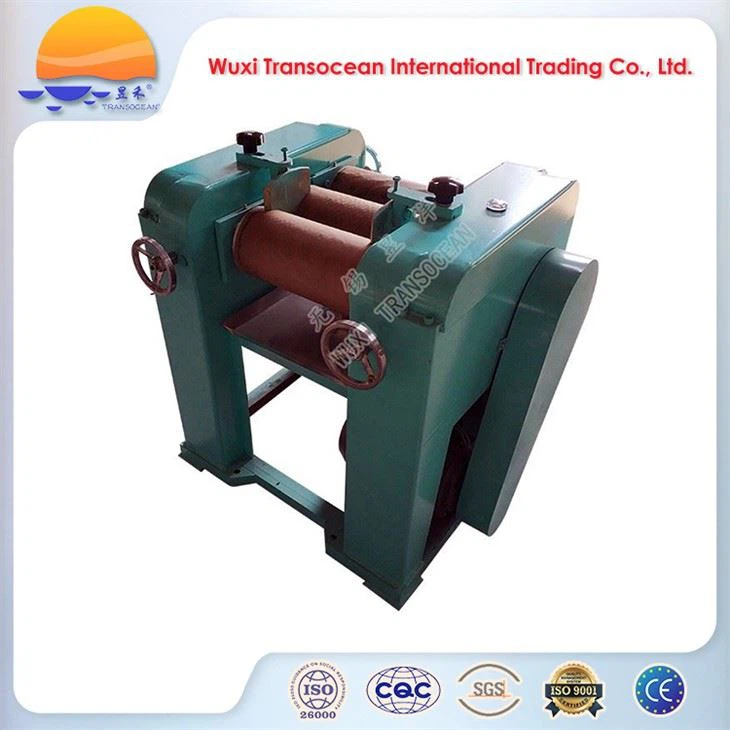
Before diving into the tips, let's briefly review how a triple roller grinder works. A triple roller grinder consists of three horizontally arranged rollers that rotate at different speeds. The material to be ground is fed between the first two rollers, where it is sheared and compressed. As the material moves between the second and third rollers, further grinding and refinement occur. The final product is then scraped off the third roller.
The key to achieving high-quality grinding lies in controlling the gap between the rollers, the speed of rotation, and the pressure applied to the rollers. These factors determine the shear force and the amount of grinding that occurs, which in turn affects the particle size distribution and the dispersion of the material.

Tips for Improving Grinding Quality
1. Select the Right Roller Material
The choice of roller material is crucial for achieving optimal grinding quality. Different materials have different hardness, wear resistance, and chemical resistance properties, which can affect the grinding performance and the quality of the final product. For example, ceramic rollers are known for their high hardness and wear resistance, making them suitable for grinding abrasive materials. On the other hand, steel rollers are more commonly used for general-purpose grinding applications due to their lower cost and good mechanical properties.
2. Maintain Proper Roller Alignment
Proper roller alignment is essential for ensuring uniform grinding and preventing uneven wear on the rollers. Misaligned rollers can cause the material to be ground unevenly, resulting in a wider particle size distribution and poor dispersion. To maintain proper roller alignment, regularly check the roller bearings and adjust them as needed. Additionally, make sure the rollers are clean and free of debris, as any foreign particles can cause misalignment and damage to the rollers.
3. Control the Roller Gap
The roller gap is one of the most critical factors affecting the grinding quality. A smaller roller gap results in a finer particle size and better dispersion, but it also increases the risk of clogging and excessive wear on the rollers. On the other hand, a larger roller gap may not provide sufficient grinding, resulting in a coarser particle size and poor product quality. To find the optimal roller gap for your application, start with a relatively large gap and gradually decrease it until you achieve the desired particle size and dispersion.
4. Optimize the Roller Speed
The roller speed also plays a significant role in the grinding process. A higher roller speed increases the shear force and the amount of grinding, resulting in a finer particle size and better dispersion. However, it also increases the energy consumption and the risk of overheating the rollers. To optimize the roller speed, consider the type of material being ground, the desired particle size, and the capacity of the grinder. In general, a higher roller speed is recommended for grinding hard and abrasive materials, while a lower roller speed is suitable for soft and sticky materials.
5. Use the Right Grinding Media
Grinding media, such as beads or balls, can be used to enhance the grinding performance of a triple roller grinder. The choice of grinding media depends on the type of material being ground, the desired particle size, and the grinding conditions. For example, glass beads are commonly used for grinding pigments and dyes, while ceramic beads are preferred for grinding abrasive materials. When using grinding media, make sure to select the appropriate size and shape to ensure efficient grinding and prevent damage to the rollers.
6. Maintain a Consistent Feed Rate
Maintaining a consistent feed rate is essential for achieving uniform grinding and preventing overloading of the grinder. An inconsistent feed rate can cause the material to be ground unevenly, resulting in a wider particle size distribution and poor product quality. To maintain a consistent feed rate, use a feeder or a dosing system that can accurately control the amount of material being fed into the grinder. Additionally, make sure the material is properly pre-mixed and free of lumps or agglomerates, as these can cause blockages and affect the grinding performance.
7. Clean and Maintain the Grinder Regularly
Regular cleaning and maintenance of the triple roller grinder are essential for ensuring its optimal performance and longevity. Over time, the rollers and other components of the grinder can accumulate dirt, debris, and residual material, which can affect the grinding quality and cause damage to the machine. To clean the grinder, use a suitable cleaning agent and a soft brush or cloth to remove any dirt or debris from the rollers and other components. Additionally, regularly lubricate the bearings and other moving parts to prevent wear and tear.
Advanced Strategies for Improving Grinding Quality
1. Implement a Quality Control System
Implementing a quality control system is essential for ensuring consistent grinding quality and meeting the required product specifications. A quality control system typically includes regular testing and analysis of the ground material to monitor its particle size distribution, dispersion, and other quality parameters. Based on the test results, adjustments can be made to the grinding process to optimize the quality of the final product.
2. Use Process Optimization Techniques
Process optimization techniques, such as statistical process control (SPC) and design of experiments (DOE), can be used to optimize the grinding process and improve the grinding quality. SPC involves monitoring and controlling the process variables to ensure that they remain within the specified limits. DOE, on the other hand, involves systematically varying the process variables to identify the optimal settings for achieving the desired product quality.
3. Invest in Advanced Grinding Technology
Investing in advanced grinding technology, such as high-speed triple roller grinders or automated grinding systems, can significantly improve the grinding quality and productivity. High-speed triple roller grinders can achieve finer particle sizes and better dispersion in a shorter time, while automated grinding systems can reduce the manual labor required and improve the consistency of the grinding process.
Conclusion
Improving the grinding quality of a triple roller grinder requires a combination of proper equipment selection, maintenance, and process optimization. By following the tips and strategies outlined in this blog, you can achieve finer particle sizes, better dispersion, and more consistent product quality. As a supplier of triple roller grinders, we are committed to providing our customers with high-quality equipment and technical support to help them achieve their grinding goals. If you have any questions or need further assistance, please feel free to [contact us for procurement negotiation]. We look forward to working with you to improve your grinding process and enhance the quality of your products.
References
- "Principles of Grinding" by John C. Jaeger
- "Handbook of Powder Technology" edited by Pieter C. Kapteijn and Jacob A. Moulijn
- "Industrial Mixing: Science and Practice" by Edward L. Paul, Victor A. Atiemo-Obeng, and Suzanne M. Kresta


