
Hey there! As a supplier of sand mills, I've been diving deep into the world of these machines for quite some time. And let me tell you, designing an optimal structure for a sand mill is no walk in the park. But with the right knowledge and approach, it's definitely achievable. So, let's break it down and see how we can create the best sand mill structure possible.
Understanding the Basics of a Sand Mill
First things first, we need to understand what a sand mill is and what it does. A sand mill is a type of equipment used for wet grinding and dispersing. It works by using grinding media, usually tiny beads or balls, to break down particles in a liquid suspension. This process is crucial in many industries, such as paints, inks, coatings, and pharmaceuticals.
The basic components of a sand mill typically include a grinding chamber, a shaft with agitator discs, a motor, and a cooling system. The grinding chamber is where the magic happens. It's filled with the grinding media and the material to be ground. The agitator discs on the shaft spin at high speeds, causing the grinding media to collide with the particles, breaking them down into smaller sizes.
Factors to Consider in Designing the Structure
Now that we know the basics, let's talk about the factors we need to consider when designing the optimal structure for a sand mill.
1. Material Compatibility
The first thing we need to think about is the material that will be processed in the sand mill. Different materials have different properties, such as hardness, viscosity, and chemical reactivity. For example, if you're grinding a highly abrasive material, you'll need a grinding chamber and agitator discs made of a hard, wear-resistant material like ceramic or tungsten carbide. On the other hand, if you're processing a chemically reactive material, you'll need to choose materials for the mill that won't react with it.
2. Grinding Efficiency
Another important factor is grinding efficiency. We want to design the sand mill in a way that it can achieve the desired particle size in the shortest amount of time. This means optimizing the design of the agitator discs and the grinding chamber. For instance, the shape and arrangement of the agitator discs can have a big impact on how effectively the grinding media is agitated. Some designs use multiple discs with different shapes and sizes to create a more turbulent flow, which can improve grinding efficiency.
3. Heat Dissipation
During the grinding process, a lot of heat is generated. If this heat isn't dissipated properly, it can damage the material being processed and even the sand mill itself. That's why we need to design an effective cooling system. There are different types of cooling systems available, such as jacketed cooling and internal cooling. Jacketed cooling involves surrounding the grinding chamber with a jacket through which a coolant flows. Internal cooling, on the other hand, uses a coolant that circulates inside the shaft and agitator discs.
4. Maintenance and Cleaning
A good sand mill design should also be easy to maintain and clean. Over time, the grinding media and the material being processed can build up inside the mill, which can affect its performance. We need to design the mill in a way that allows for easy access to the internal components for cleaning and replacement. For example, some sand mills have a removable grinding chamber or a quick-release mechanism for the agitator discs, making it easier to clean and maintain the machine.
Different Types of Sand Mill Structures
There are several types of sand mill structures available, each with its own advantages and disadvantages. Let's take a look at some of the most common ones.
Basket Grinding Mill
The Basket Grinding Mill is a popular type of sand mill. It consists of a basket-shaped grinding chamber that is immersed in the material to be processed. The agitator discs inside the basket spin at high speeds, causing the grinding media to grind the particles. One of the advantages of the basket grinding mill is that it's relatively easy to clean and maintain. It's also suitable for small to medium-scale production.
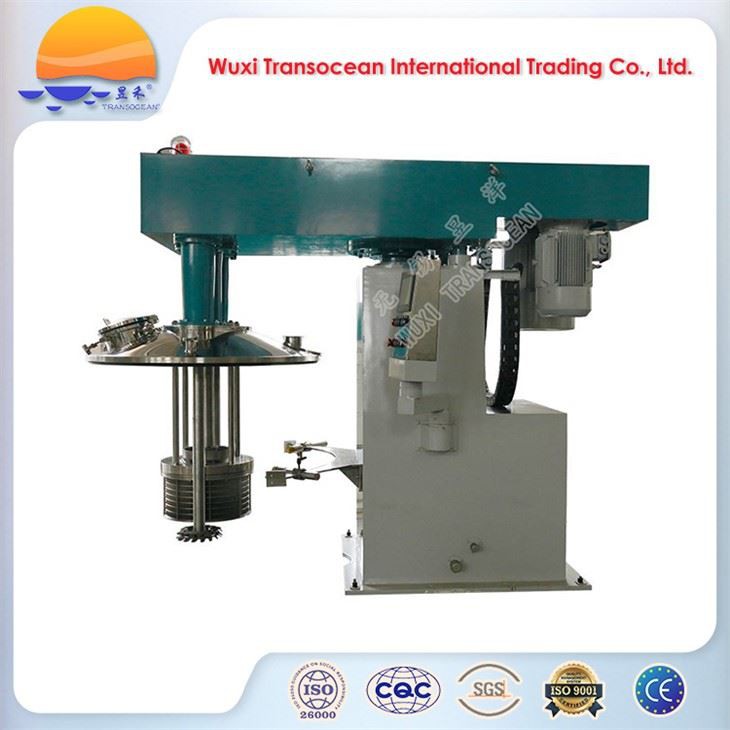

Printing Ink Basket Mill
The Printing Ink Basket Mill is a specialized type of basket grinding mill designed specifically for the printing ink industry. It has a unique design that allows for precise control of the grinding process, which is crucial for producing high-quality printing inks. This type of mill is often used for grinding pigments and other additives to achieve the desired particle size and dispersion.
Dispersing Grinding Mill
The Dispersing Grinding Mill combines the functions of grinding and dispersing. It has a special agitator design that not only grinds the particles but also disperses them evenly in the liquid suspension. This type of mill is often used in industries where a high degree of dispersion is required, such as the paint and coating industry.
Designing the Optimal Structure
Now that we've discussed the factors to consider and the different types of sand mill structures, let's talk about how to design the optimal structure.
1. Start with a Clear Goal
The first step is to define your goals. What kind of material do you want to process? What is the desired particle size? What is the production capacity you need? Having a clear goal will help you make the right design decisions.
2. Choose the Right Components
Based on your goals, choose the right components for your sand mill. This includes the grinding chamber, agitator discs, motor, and cooling system. Make sure the components are compatible with each other and with the material you'll be processing.
3. Optimize the Design
Once you've chosen the components, optimize the design to improve grinding efficiency, heat dissipation, and ease of maintenance. This may involve making changes to the shape and arrangement of the agitator discs, the size and shape of the grinding chamber, or the type of cooling system.
4. Test and Improve
After you've designed the sand mill, test it to see how it performs. Collect data on the grinding efficiency, particle size distribution, and heat generation. Use this data to identify areas for improvement and make the necessary changes to the design.
Conclusion
Designing an optimal structure for a sand mill is a complex process that requires careful consideration of many factors. By understanding the basics of sand mills, considering the material compatibility, grinding efficiency, heat dissipation, and maintenance requirements, and choosing the right type of structure, you can create a sand mill that meets your specific needs.
If you're in the market for a sand mill or have any questions about sand mill design, don't hesitate to reach out. We're here to help you find the best solution for your business. Let's start a conversation and see how we can work together to improve your grinding process.
References
- "Handbook of Industrial Mixing: Science and Practice" by Edward L. Paul, Victor A. Atiemo-Obeng, and Suzanne M. Kresta
- "Principles of Colloid and Surface Chemistry" by David C. Prieve
- "Particle Size Measurement" by Allen, T.


