
Hey there! As a supplier of Dispersing Grinding Mills, I'm here to share some insights on how to adjust the grinding fineness in these awesome machines. It's a crucial aspect, especially if you want top - notch results for your applications.
Let's start with the basics. The grinding fineness in a Dispersing Grinding Mill is all about how small the particles of your material end up after the grinding process. This fineness can significantly impact the quality and performance of the final product. Whether you're working on painting, printing ink, or other industries, getting the right fineness is a game - changer.
Factors Affecting Grinding Fineness
Before we dive into the adjustment methods, let's understand the factors that play a role in determining the grinding fineness.

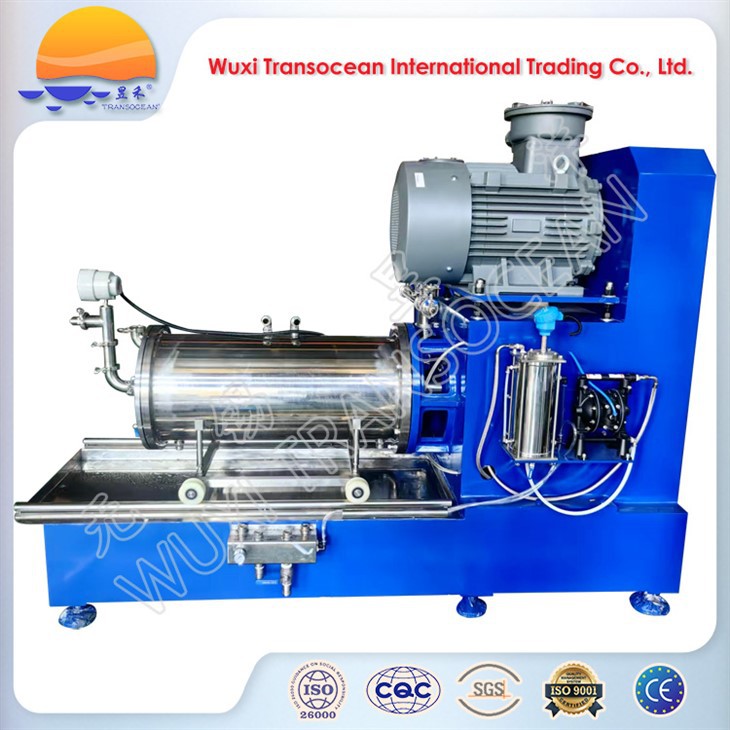
- Grinding Media
The type and size of the grinding media are super important. Smaller grinding media tend to produce finer particles. For example, if you're using ceramic beads as grinding media, smaller - sized beads will have more contact points with the material, leading to more efficient grinding. You can think of it like sanding a piece of wood. Finer sandpaper gives you a smoother finish, and similarly, smaller grinding media give you finer particles. - Rotational Speed
The speed at which the mill rotates matters a lot. A higher rotational speed means more energy is applied to the material, resulting in finer grinding. However, you can't just crank up the speed without limits. If the speed is too high, it might cause over - heating, damage to the mill, or even change the properties of the material you're grinding. So, it's all about finding that sweet spot. - Feed Rate
The amount of material you feed into the mill at a time also affects the grinding fineness. If you feed too much material at once, the mill might not be able to grind it all effectively, and you'll end up with coarser particles. On the other hand, if the feed rate is too low, it might be a waste of time and energy. You need to figure out the optimal feed rate based on your mill's capacity and the material you're working with.
Adjustment Methods
Now that we know the factors, let's talk about how to adjust the grinding fineness.
- Changing Grinding Media
If you find that your grinding fineness isn't up to par, one of the first things you can do is change the grinding media. Switch to smaller - sized beads or use a different type of media with better grinding capabilities. For example, zirconia beads are known for their high - density and excellent grinding performance. By making this simple change, you can often achieve a significant improvement in the fineness of your ground material. - Adjusting Rotational Speed
Most Dispersing Grinding Mills come with the option to adjust the rotational speed. You can start by gradually increasing the speed and observe the effect on the grinding fineness. Keep in mind that you should monitor the temperature of the mill during this process. If it starts to get too hot, you might need to reduce the speed a bit. You can also refer to the manufacturer's guidelines to find out the safe speed range for your specific mill. - Controlling Feed Rate
As mentioned earlier, the feed rate is crucial. Use a feeder to control the amount of material going into the mill. If you want finer particles, try reducing the feed rate slightly. This gives the mill more time to work on each particle, resulting in a finer grind. You may need to do some trial - and - error to find the ideal feed rate for your application.
Practical Examples
Let's take a look at some real - world scenarios to understand how these adjustments work.
Imagine you're working in the printing ink industry. You're using a Printing Ink Basket Mill to grind the pigments for your ink. You notice that the ink isn't as smooth as you'd like, indicating that the grinding fineness isn't good enough.
First, you can check the grinding media. Maybe the beads you're using are a bit too large. You decide to switch to smaller zirconia beads. After making the change and running the mill again, you find that the ink has a much smoother texture, and the color dispersion is better.
Next, let's say you're using a Vertical Bead Mill for a paint production process. The paint seems to have some gritty particles, and you suspect the feed rate is too high. You reduce the feed rate by adjusting the feeder settings. After a few runs, you see that the paint is now more uniform, and the gritty particles are gone.
For a more advanced application, if you're using a Horizontal Disc Type Sand Mill in a chemical manufacturing process, and the fineness of the product isn't meeting the specifications. You can try increasing the rotational speed gradually while closely monitoring the temperature. Once you find the right speed, you'll notice a significant improvement in the product's fineness.
Troubleshooting
Even if you follow all the adjustment methods, you might still encounter some issues with the grinding fineness. Here are some common problems and how to fix them.
- Inconsistent Fineness
If you're getting inconsistent fineness, it could be due to uneven distribution of the grinding media or a problem with the feed system. Check the grinding chamber to make sure the media is evenly distributed. Also, inspect the feeder to ensure that the material is being fed uniformly. - Excessive Heat
As mentioned earlier, high rotational speeds can cause over - heating. If you notice that the mill is getting too hot, reduce the speed immediately. You can also check the cooling system of the mill to make sure it's working properly. - Poor Grinding Performance
If the grinding performance is poor even after adjusting all the parameters, there might be a mechanical issue with the mill. Check the bearings, seals, and other components for any signs of wear or damage. If you're not sure how to do this, it's best to contact a professional maintenance service.
Conclusion
Adjusting the grinding fineness in a Dispersing Grinding Mill is a combination of understanding the factors that affect it and using the right adjustment methods. By carefully considering the grinding media, rotational speed, and feed rate, you can achieve the perfect fineness for your specific application.
If you're in the market for a high - quality Dispersing Grinding Mill or need more advice on how to optimize your grinding process, don't hesitate to reach out. We're here to help you get the best results for your business. Whether you're a small - scale operation or a large - scale industrial manufacturer, we've got the solutions you need. Contact us to start a discussion about your requirements and let's work together to take your grinding process to the next level.
References
- "Principles of Grinding Technology" by John C. Aurich
- "Industrial Grinding Mills: Design and Operations" by R. Pongstabodee


